
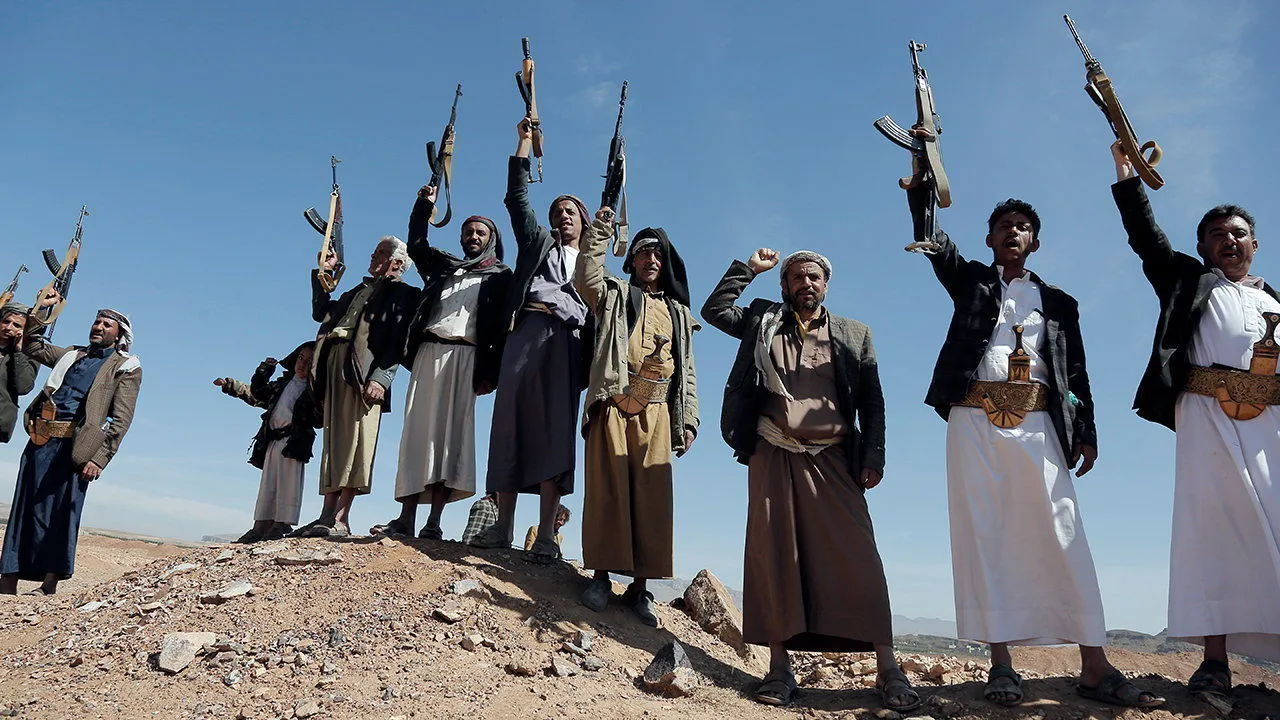
The Houthis, also known as Ansar Allah, are an armed political and religious group in Yemen. They champion Yemen’s Shia Muslim minority, the Zaidis, and consider themselves part of the Iranian-led “axis of resistance” against Israel, the US, and the wider West. This axis also includes armed groups such as Hamas and Lebanon’s Hezbollah movement.
Advertisement
The Houthis gained prominence during the Arab Spring uprising in 2011. They fought a series of rebellions against Yemen’s long-time authoritarian president, Ali Abdullah Saleh, seeking greater autonomy for their homeland in the north of Yemen. After President Saleh handed over power to his deputy, Abdrabbuh Mansour Hadi, during the Arab Spring, Hadi’s government faced numerous challenges.

The Houthis seized control of the northern province of Saada and later took over the Yemeni capital, Sanaa, forming an unlikely alliance with Saleh and security forces loyal to him. In September 2014, the Houthis escalated their actions by taking control of much of northern Yemen. President Hadi announced an unpopular cut to fuel subsidies, which led to demonstrations.
Advertisement
The protests turned into full-blown fighting between Houthi militants and army forces loyal to General Ali Mohsen al-Ahmar in Sanaa. The Houthis achieved a swift victory, forcing the government to negotiate with them. They obtained significant control over the formation of a new “unity government” and constitution-drafting process.
In January 2015, Houthi forces assaulted the presidential palace and private residence of President Hadi, placing him and his ministers under virtual house arrest while demanding further concessions. Hadi and his cabinet resigned on January 22. Three weeks later, on February 6, 2015, the Houthis declared the House of Representatives defunct and named a Revolutionary Committee led by Mohammed Ali al-Houthi as the acting authority in Yemen.
The aftermath of the Houthi takeover in Yemen led to widespread domestic and international opposition to their coup. Despite their military successes and an alleged alliance with the former ruling General People’s Congress, they eventually assented to United Nations-led talks on a power-sharing deal.
President Hadi fled Sanaa for Aden, where he declared that the Houthi takeover was illegitimate and indicated he remained the constitutional president of Yemen. However, a Houthi-led military campaign wrested much of southern Yemen from Hadi’s loyalists, prompting Saudi Arabia to launch airstrikes against Houthi positions throughout.
Leave a Reply