

The Flatiron Building has experienced numerous ownership changes over the years. Helmsley-Spear administered the structure for the majority of the second half of the 20th century before being taken over by the Newmark Group in 1997.
Advertisement
The building, which is owned by a number of various parties, started getting renovated in 2019. The three portions of the building’s outside facade resemble the design of a classical column.
The upper floors are decorated with glazed terracotta, while the foundation is three stories tall and composed of limestone.
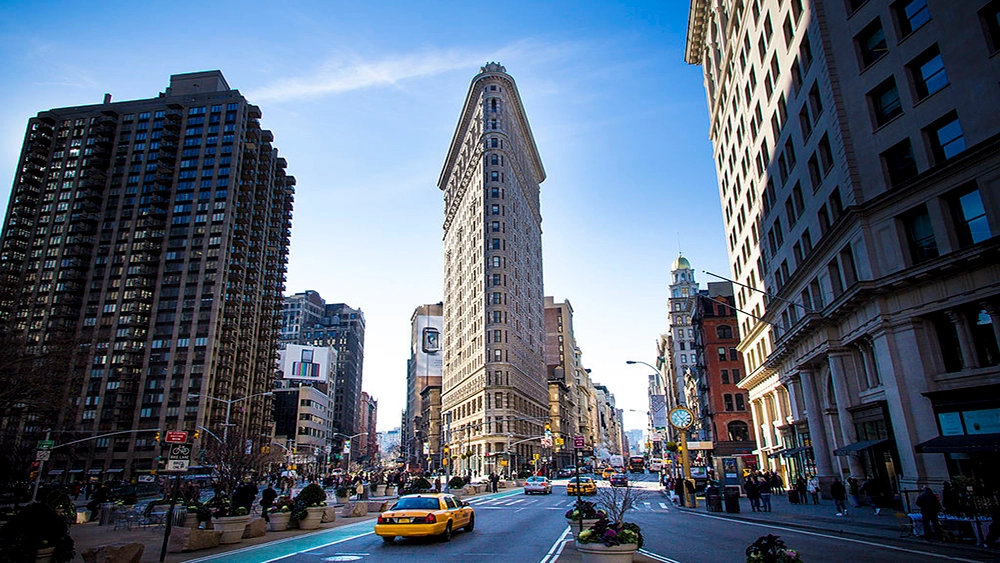
Purdy and Henderson engineered the steel frame of the building to resist winds up to four times the area’s maximum wind speed. The structure is now regarded as one of the most recognizable skyscrapers in the entire globe and a representation of New York City.
Who lives in the Flatiron building?
The Flatiron Building is an office building and has been since it first opened in the 1920s. No one lives there. The Italian real estate investment business Sorgente Group obtained a majority stake in the building in June 2008, and although it is uncertain who the future occupants will be, it will remain an office building, according to one of its owners, Veronica. It is not a residential building, thus no one can live there unless it is transformed into condos.
Advertisement
Does the Flatiron building have a 13th floor?
Yes, The Flatiron Building, Empire State Building, Waldorf Astoria Hotel, and all Hilton International hotels all have 13th floors in New York City.
What is the superstition about the 13th floor?
There is a myth that the 13th floor is unlucky or even foreboding. In many structures, especially high-rise ones, the 13th level is bypassed in numbering and marked as the 14th floor. “Skipping the 13th floor” or “floor numbering superstition” are terms used to describe this habit.
Although the origins of this superstition are unknown, it is thought to have originated in antiquity when the number 13 was considered unlucky or wicked. In Christianity, for instance, the Last Supper was attended by 13 people, and Judas Iscariot, who betrayed Jesus, is claimed to have been the 13th person to take a seat at the table.
The 13th-floor superstition has been maintained by popular culture in more recent times, including movies, books, and other media. Many individuals refrain from purchasing properties on the 13th floor or booking hotel rooms.
Despite the fact that superstitions are not supported by facts or logical reasoning, they can have a big influence on people’s behavior and choices.
Leave a Reply