
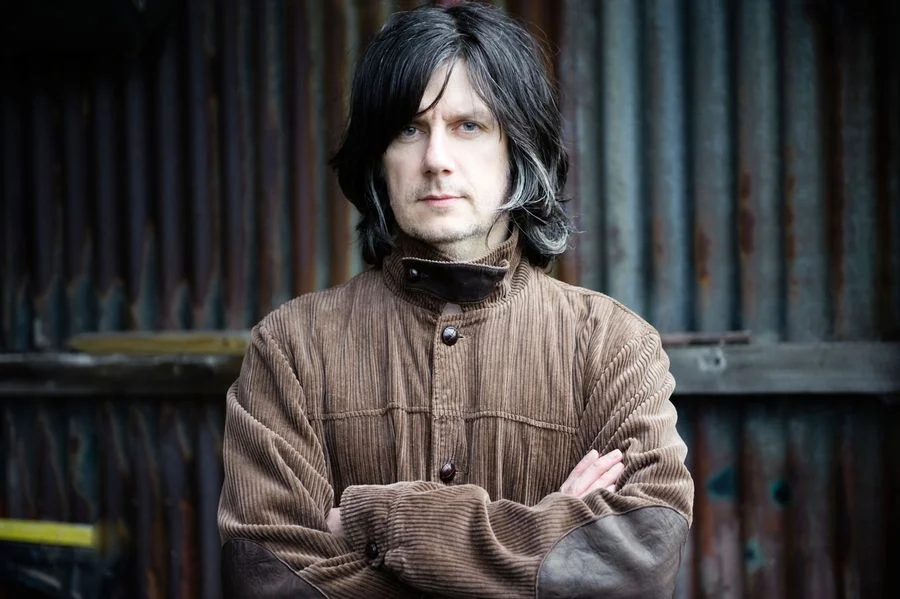
John Squire, the accomplished guitarist and visual artist, has been influenced by a diverse array of musical and artistic sources throughout his illustrious career.
Advertisement
Born on November 24, 1962, in Broadheath, Greater Manchester, Squire gained prominence as a founding member of the influential alternative rock band The Stone Roses.
One of the earliest and most profound influences on John Squire’s musical journey was the punk rock movement of the late 1970s. The rebellious and DIY ethos of punk left an indelible mark on Squire’s approach to music, instilling in him a sense of freedom and creativity.
As a guitarist, Squire’s style and technique have been shaped by a combination of classic rock influences and emerging post-punk sounds. He admired the raw energy and bluesy undertones of guitarists like Jimi Hendrix and Jimmy Page, incorporating elements of their playing into his own evolving style.
Advertisement

Credit: Paul Bergen
The fusion of classic rock with the burgeoning post-punk scene contributed to the distinctive sound that would later define The Stone Roses. The Manchester music scene of the late 1980s played a pivotal role in shaping Squire’s artistic direction.
The vibrant and eclectic music culture in the city provided fertile ground for experimentation and collaboration. It was within this rich musical landscape that Squire formed The Stone Roses with Ian Brown, Reni, and Mani. The band’s debut album, released in 1989, showcased Squire’s jangly guitar work, melodic sensibility, and a willingness to push boundaries.
John Squire’s artistic influences extend beyond the realm of music into the world of visual arts, and one notable figure who left an impression on him is the iconic American painter Jackson Pollock. Pollock, a key figure in the abstract expressionist movement, is renowned for his innovative “drip painting” technique, where he would rhythmically drip and pour paint onto canvases laid on the floor.
Leave a Reply