

The Allies and Motives Behind Hernán Cortés’ Conquest: Unveiling the Forces That Shaped History
Hernán Cortés, the Spanish conquistador, emerged as a central figure in the transformation of the Americas in the early 16th century. His conquest, which led to the fall of the Aztec Empire and the subsequent expansion of Spanish dominion, was influenced by a confluence of factors strategic alliances, personal ambitions, and the quest for wealth and religious conversion.
Advertisement
One of the key figures aiding Hernán Cortés in his conquest was a woman named La Malinche, also known as Malintzin. She played a pivotal role as an invaluable interpreter, advisor, and confidant for Cortés. La Malinche, born into an indigenous noble family, possessed linguistic skills in Nahuatl and Mayan, which enabled her to communicate with different indigenous groups. Her assistance in bridging linguistic barriers between the Spanish and indigenous populations was instrumental in Cortés’ interactions and negotiations.
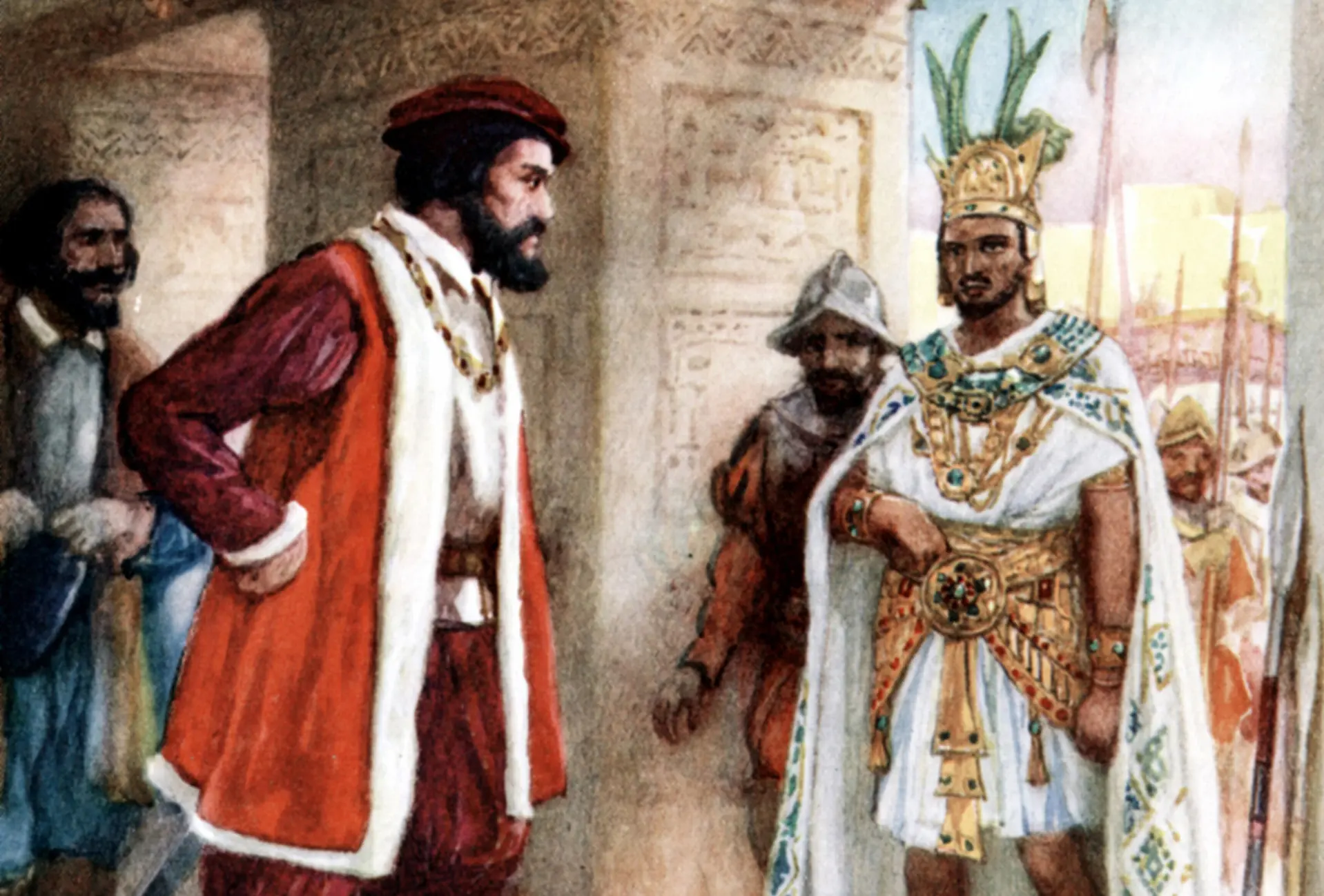
La Malinche’s collaboration with Cortés significantly influenced the success of his expedition. Her linguistic abilities and cultural understanding allowed Cortés to form alliances with indigenous groups that were discontented with the Aztec rule. Her role as an intermediary and interpreter played a crucial part in Cortés’ ability to navigate and manipulate the political landscape in the region.
Advertisement
Cortés, motivated by a mix of personal aspirations and imperial ambitions, set his sights on the conquest of the Aztecs. His motivations were multifaceted, driven by a desire for wealth and personal glory, coupled with a zeal to spread Catholicism among the indigenous populations.
The allure of taking the Aztec resources, especially the legendary gold of the region, was a key factor in Cortés’ ambitions. The tales of wealth and gold in the fabled lands of the Aztecs motivated the conquistador to undertake the perilous journey and conquest. Cortés and his men were fervently seeking riches that they believed were abundant in the New World.
Moreover, Cortés harbored ambitions for personal glory and a place in history. The conquest of the Aztecs represented an opportunity for Cortés to establish his name and secure a place of honor in the annals of exploration and conquest.
Religious fervor was another motivation for Cortés. He aimed to spread Catholicism and convert the indigenous populations to Christianity. The desire to impose Spanish religious and cultural influence was a significant aspect of his conquest, influenced by the prevailing religious zeal of the time and the Spanish Crown’s aim of religious expansion.
Hernán Cortés’s conquest of the Aztecs was driven by a combination of strategic alliances, personal ambitions, and imperial objectives. His collaboration with La Malinche, the quest for wealth and personal glory, and the aspiration to propagate Catholicism all played integral roles in shaping the conquest that altered the course of history in the early 16th century. The multifaceted motivations behind Cortés’ expedition underscore the intricate nature of conquest and the interplay of various forces that shaped the history of the Americas.
Leave a Reply