
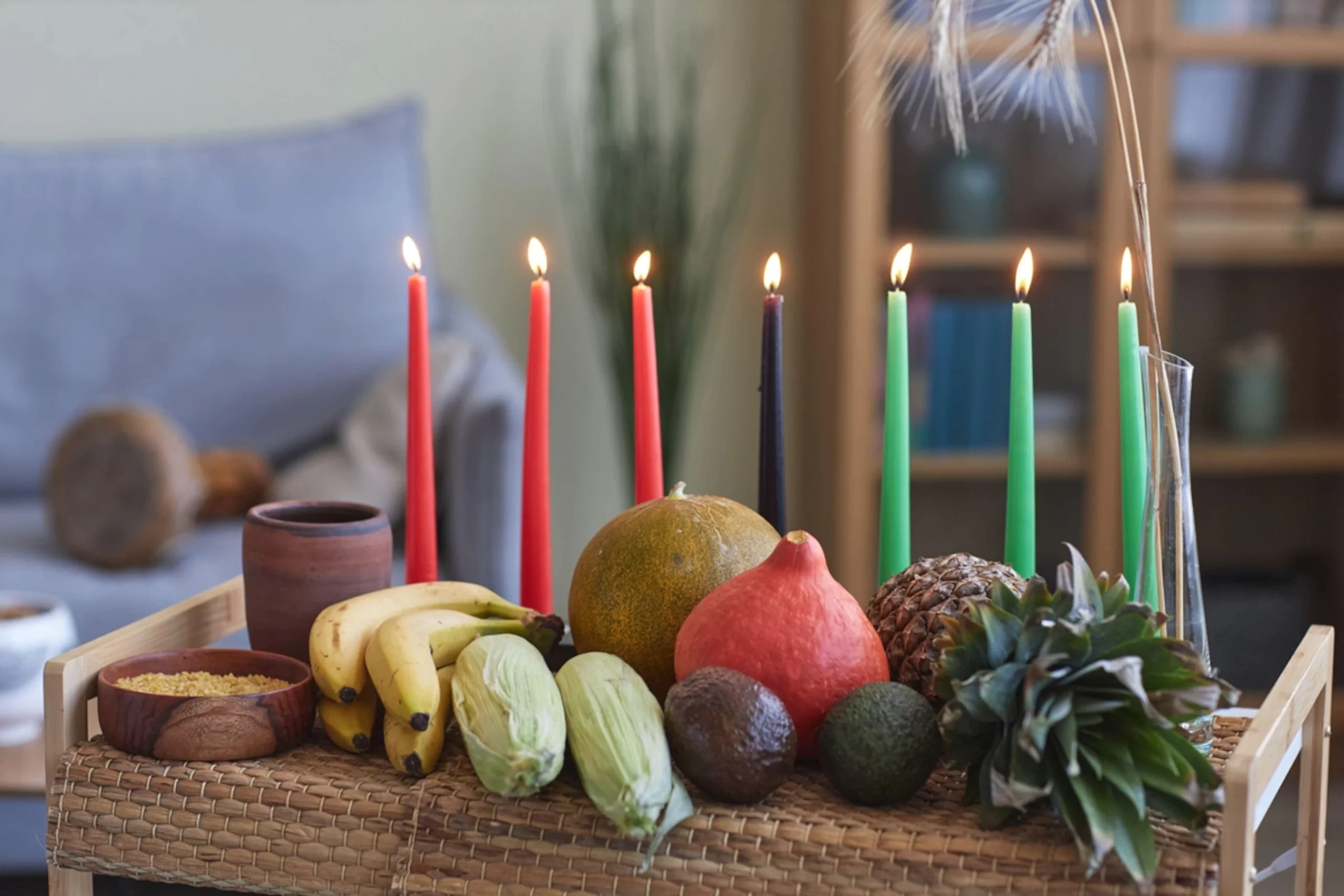
One of the symbols of Kwanzaa is the bendera, or flag, which has three colors: black, red, and green. These colors were inspired by the Pan-African flag designed by Marcus Garvey, a leader of the Black nationalist movement. Black represents the people, red represents their struggles, and green represents their hope and future.
Advertisement
The bendera is often displayed along with other symbols of Kwanzaa, such as the kinara (candle holder), the mkeka (mat), the muhindi (corn), the kikombe cha umoja (unity cup), the mishumaa saba (seven candles), and the zawadi (gifts).
Advertisement

Another important aspect of Kwanzaa is the food. On the sixth night of Kwanzaa, a feast called karamu is held, where families and friends gather to share dishes that reflect their African roots and influences.
Some of the common foods eaten during Kwanzaa include fried chicken, okra, collard greens, sweet potatoes, cornbread, rice, ham, turkey, catfish, gumbo, jerk chicken, curry, peanut stew, fritters, and feijoada.
These foods not only nourish the body, but also connect the participants to their ancestors and their history. They also represent the diversity and creativity of African cuisine across the world.
Leave a Reply