
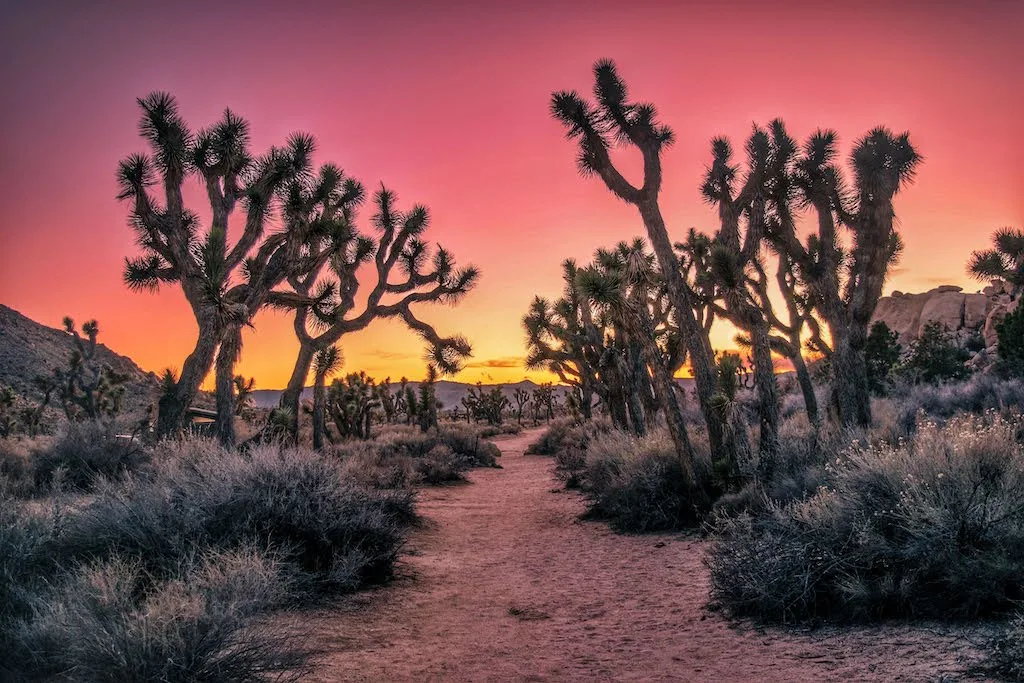
The ancient history of Joshua Tree goes back to the Pinto Culture, which lived and hunted here between 8000 and 4000 BCE. They left behind stone tools and spear points, but not much else is known about them. Later, the Serrano, Cahuilla, Chemehuevi, and Mojave peoples inhabited the area, using plants and animals for food, medicine, and crafts.
Advertisement
They also had a spiritual connection to the land, especially the Oasis of Mara, where water and life were abundant. The name Joshua Tree comes from the 19th-century Mormon settlers, who saw the tree’s branches as a sign of guidance from the biblical figure Joshua.
The trees are succulents, not true trees, and they store water in their trunks and roots. They are native to the Mojave Desert, one of the two deserts that meet in the park. The other is the Colorado Desert, which is lower and hotter than the Mojave.
Advertisement
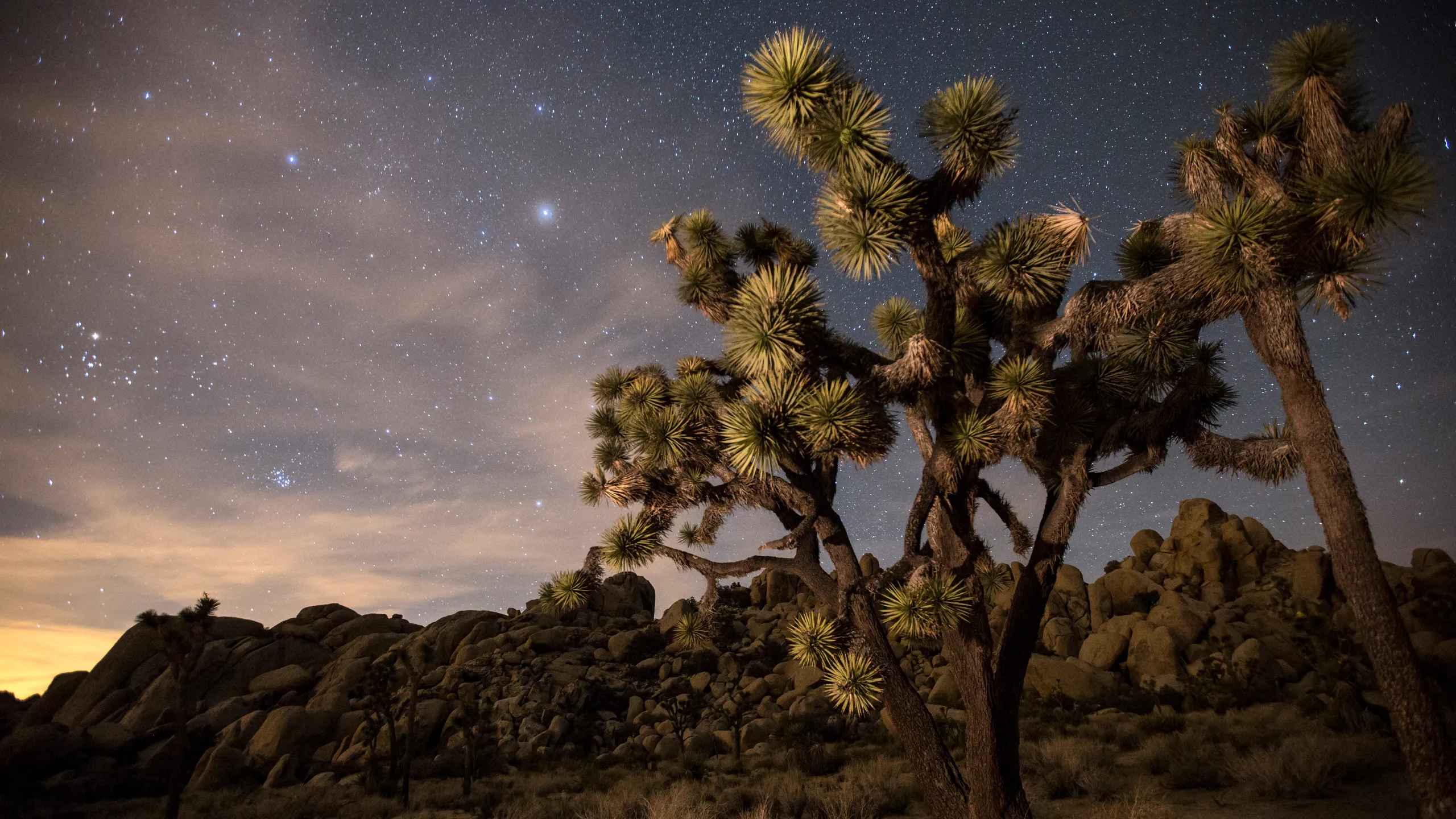
The geology of Joshua Tree is shaped by volcanic activity, erosion, and faulting. The oldest rocks in the park are metamorphic rocks that formed 1.4 to 1.7 billion years ago. They were later intruded by magma that cooled into igneous rocks such as granite and quartz monzonite.
These rocks are exposed in the park as towering monoliths, domes, and boulders that attract rock climbers from all over the world. The type of stone in Joshua Tree varies depending on the location and elevation. In the higher Mojave Desert, you can find granite, gneiss, quartzite, and schist.
In the lower Colorado Desert, you can find sandstone, limestone, conglomerate, and basalt. The park also has many joints and faults, which are cracks in the rocks that allow water and wind to sculpt them into different shapes. The most famous fault in the region is the San Andreas Fault System, which runs just outside the park boundary.
Leave a Reply