
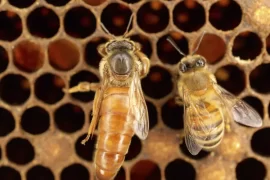
The queen bee is an important member of her hive because she is the only female bee who lays eggs. It’s not surprising, then, that when a queen bee dies, the entire colony, which can number in the thousands, is thrown into chaos.
Advertisement
The queen bee sends out chemical signals that disable the ovaries of other female worker bees. However, these chemical signals wear off soon after she dies, allowing worker bees to lay eggs and causing the highly efficient, carefully controlled system to fail.
Disease, predator attack or beekeeper error are the most prevalent reasons for queen bee death. When a queen bee dies unexpectedly, the colony is upset, but it moves rapidly to replace her.
Advertisement

Workers usually identify eggs or larvae that are less than three days old and place them in specially built, vertically hanging “queen cells.” It takes around three days for the fertilised eggs to hatch. They feed royal jelly to the larvae.
After roughly six days of fast growth, they pupate in the cells. The young queen bees emerge around eight days later, take nuptial flights, mate in the air with drones or male bees, and attempt to kill other virgin queens. After that, the last queen bee begins to lay eggs. It takes roughly 29 days from queen loss to egg stage.
Leave a Reply