
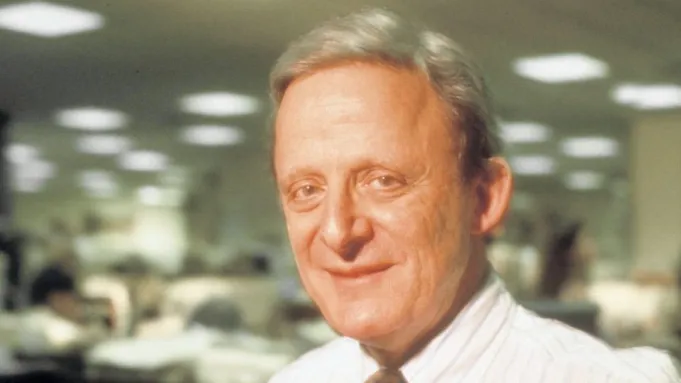
Joseph Lelyveld, the former executive editor and foreign correspondent for The New York Times, passed away on Friday at his Manhattan residence at the age of 86. Lelyveld, celebrated for winning the 1986 Pulitzer Prize for his nonfiction work “Move Your Shadow: South Africa, Black and White,” succumbed to complications arising from Parkinson’s disease, as confirmed by Janny Scott, his partner of 19 years and a former Times reporter.
Advertisement

Throughout his extensive career, Lelyveld reported from various global locations, including Washington, Congo, India, Hong Kong, Johannesburg, and London. Serving as the executive editor of The New York Times from 1994 to 2001, a role often considered one of the most influential in American journalism, Lelyveld oversaw the newspaper’s transition into the digital age. He played a pivotal role in the establishment of The New York Times website and the introduction of 24-hour news coverage.
Advertisement
Lelyveld chose to retire a week before the tragic events of September 11, 2001. However, he returned to the top post in June 2003 following revelations of journalistic fraud and plagiarism by reporter Jayson Blair. His interim leadership lasted six weeks, after which Bill Keller, a columnist and former Times correspondent, assumed the role of executive editor.
In a statement on Friday, former publisher Arthur Sulzberger, now chairman emeritus of The New York Times Company, paid tribute to Lelyveld, acknowledging him not only as a giant in journalism but also as a thoughtful and compassionate man who cared deeply about his colleagues. Sulzberger highlighted Lelyveld’s significant contributions during the challenges of the internet era and his return to heal the newsroom during a low point, emphasizing his enduring legacy of journalistic triumphs and humanity.
Leave a Reply