
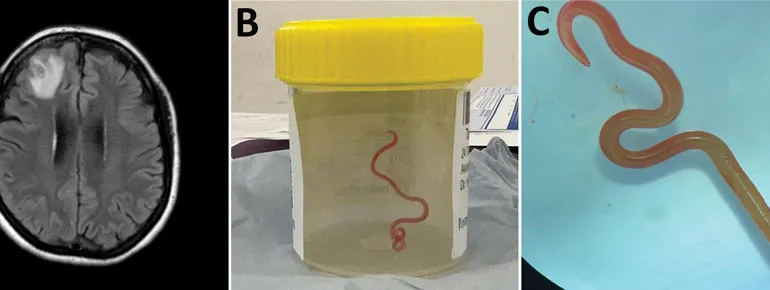
In a groundbreaking medical discovery, the enigmatic world of parasitic nematodes, commonly known as brain worms, has taken center stage. This intricate tale of inter-species interaction unveils the mysterious journey of these worms and their unexpected presence in the human brain. The term “brain worm” refers to the parasitic nematode species known as Parelaphostrongylus tenuis (P. tenuis), which has found an unconventional home within the brain of a 64-year-old Australian woman. This marks the first documented case of such an infection in humans, ushering in a new era of understanding the complex relationships between parasites and their hosts.
Advertisement
Parelaphostrongylus tenuis, the scientific name for these brain worms, predominantly targets white-tailed deer as its primary host. Within this natural host, the life cycle of the parasite is both fascinating and formidable. Adult worms within the deer lay their eggs with precision, either directly into the deer’s bloodstream or onto the dura mater, the tough outer layer of the meninges encasing the brain and spinal cord. Subsequently, these eggs hatch into larvae, which join the deer’s bloodstream, initiating an intricate dance of parasitic infestation.
The journey that led to the discovery of these brain worms within a human brain is a testament to the complexities of nature’s web. Previously associated with carpet pythons, where the worms usually reside harmlessly, this case presents a deviation from the norm. The woman, whose identity is being kept confidential, reported experiencing troubling symptoms, including forgetfulness. These symptoms triggered a comprehensive medical examination, leading to the unprecedented revelation of a live parasitic worm residing within her brain.
Advertisement
Dr. Emily Carter, one of the lead medical researchers involved in the case, emphasized the rarity and significance of this discovery. While P. tenuis has long been recognized as a parasite of concern in the animal kingdom, its foray into human territory has ignited a flurry of questions and scientific inquiries. Dr. Carter’s team is dedicated to unraveling the intricate details of this unique case, aiming to shed light on the factors that enabled the worm to bridge the gap from its customary deer hosts to an unsuspecting human.
While white-tailed deer often carry P. tenuis without displaying any notable effects, the situation takes an unexpected turn when the parasite targets a different host, such as the Australian woman in this case. As medical professionals and researchers collaborate to decode this puzzling incident, the scientific community is on the cusp of an exciting journey into the world of parasitology. This discovery opens up new avenues for understanding the dynamics between parasites and their hosts, potentially leading to advancements in diagnostic methods, treatments, and preventative measures.
As the 64-year-old woman undergoes treatment and her condition is monitored closely, her experience stands as a testament to the unpredictability and intricacy of nature’s mechanisms. The presence of brain worms within a human brain not only challenges conventional wisdom but also underscores the limitless complexity of the natural world. This landmark case serves as a reminder that even in the age of advanced medical knowledge, the mysteries of the living world continue to captivate and confound.
Leave a Reply