
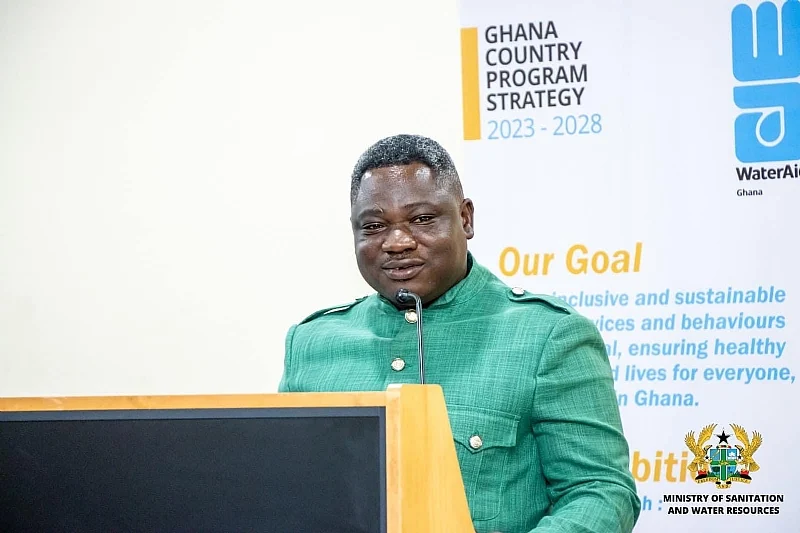
The Deputy Minister of Sanitation and Water Resources, Amidu Issahaku Chinnia, has restated the government’s unwavering commitment to ensuring access to safe drinking water nationwide, despite facing formidable obstacles in fulfilling this mission.
Advertisement
Mr. Amidu emphasized the government’s determination to create a conducive environment and implement necessary reforms to address the various challenges hindering the provision of safe water.
This commitment stems from public concerns about inconsistent water supply and the lack of safe water in certain communities.
Speaking at the Eleven Safe Water Network “Beyond the Pipe Forum 2024,” Issahaku Chinnia emphasized the government’s determination to tackle these issues head-on.

“Access to safe water is a priority for the government, and we are committed to achieving our vision of providing safe, reliable, and affordable water for all. Ghana’s government recognizes the importance of creating an enabling environment and implementing appropriate reforms to address the rapidly changing landscape for water services delivery, especially in rural areas.
Advertisement
“Some challenges we are dealing with include the varied and complex mix of service providers and delivery models without a robust institution to coordinate their work. Rapid urbanization resulting in a large gap emitting water demand, especially in peri-urban and small towns.”
Amidu Issahaku Chinnia also emphasized the significance of sustainable funding to ensure a consistent provision of safe water.
“SafeWater Network’s experience has shown that SafeWater’s enterprises perform well against standards and benchmarks for functionality, water quality, reliability, and affordability, have the benefit of being financially sustainable, covering partial or all of their operating and maintenance costs through revenues from tariffs and are an important part of the mix for sustainable water supply in Ghana, particularly in peri-urban and small towns.”
Leave a Reply