

Have you ever wondered if Groundhog Day is only celebrated in America? Or how many countries have their own version of this quirky tradition? Groundhog Day is a tradition observed in the United States and Canada on February 2 of every year.
Advertisement
It derives from the Pennsylvania Dutch superstition that if a groundhog emerges from its burrow on this day and sees its shadow, it will retreat to its den and winter will go on for six more weeks; if it does not see its shadow, spring will arrive early.
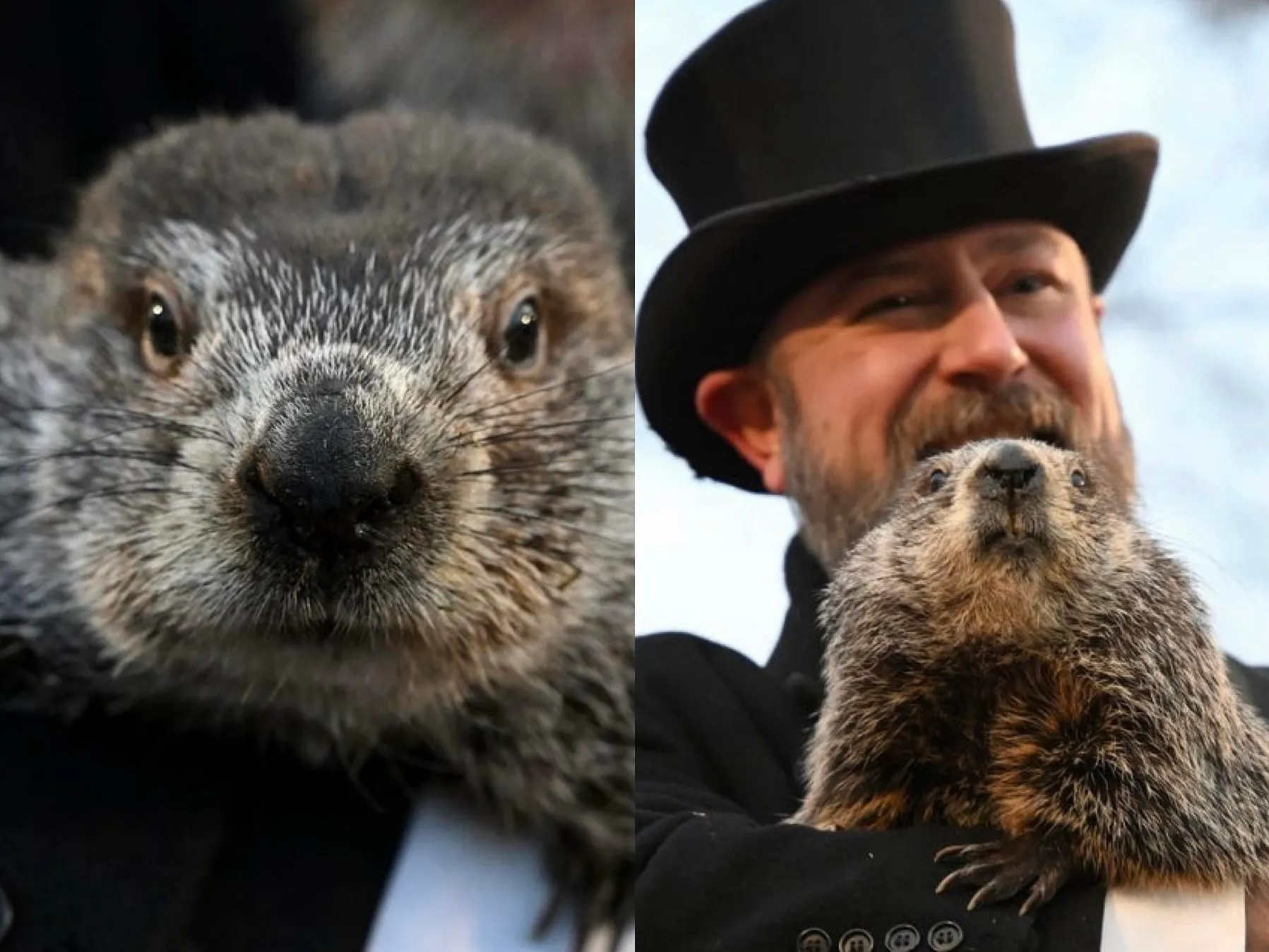
The most famous Groundhog Day ceremony is held at Punxsutawney in western Pennsylvania, centering on a semi-mythical groundhog named Punxsutawney Phil. The event attracts thousands of visitors and media attention every year. The tradition was popularized by the 1993 comedy film Groundhog Day, starring Bill Murray as a weatherman who is stuck in a time loop on February 2.
The origin of Groundhog Day can be traced back to the ancient European celebration of Candlemas, a Christian festival that marks the midpoint of winter. On Candlemas, people would light candles and pray for mild weather. According to an old English rhyme:
If Candlemas be fair and bright,
Come, Winter, have another flight;
If Candlemas brings clouds and rain,
Go Winter, and come not again.
Advertisement
In Germany, people added an animal element to the Candlemas lore. They believed that if a badger or a bear came out of its den on February 2 and saw its shadow, it meant that winter would last longer. When German immigrants settled in Pennsylvania in the 18th and 19th centuries, they brought this tradition with them but replaced the badger with the groundhog, a native animal that was more abundant and easier to observe.
While Groundhog Day is mostly a North American phenomenon, some other countries have similar traditions involving animals and weather predictions. For example:
- In France, people watch for the behavior of marmots on February 2. If they stay in their burrows, it means spring is near; if they come out, it means six more weeks of winter.
- In Serbia, people observe Sretenje or the Meeting of the Lord on February 15 (February 2 in the Julian calendar). They believe that if a bear wakes up from hibernation on this day and sees its shadow, it will go back to sleep for 40 more days; if it does not see its shadow, it will stay awake and spring will come soon.
- In Alaska, people celebrate Marmot Day on February 2 instead of Groundhog Day. The holiday was created in 2009 by then-Governor Sarah Palin as a way to honor Alaska’s marmots and their contribution to the state’s culture and economy.
- In Japan, people observe Setsubun or the Bean-Throwing Festival on February 3 or 4, depending on the year. It is a ritual to cleanse away evil spirits and welcome spring. People throw roasted soybeans around their homes and temples, chanting “Oni wa soto! Fuku wa uchi!” (“Out with the demons! In with good fortune!”). They also eat sushi rolls while facing the lucky direction of the year.
Leave a Reply