

Kwadwo Nsafoah Poku, an energy expert and member of the energy committee of the NPP 2024 manifesto, disclosed that the Electricity Company of Ghana (ECG) has agreements with independent power producers (IPPs) to supply electricity to its customers.
Advertisement
He supported the Electricity Company of Ghana (ECG) for opposing the Ghana Grid Company Limited (GRIDCo) regarding the publication of a load-management schedule.
GRIDCo, in a statement dated March 28, reported the Electricity Company of Ghana (ECG) to the sector minister, Matthew Opoku Prempeh, citing the power distributor’s non-compliance with a load-management schedule from the systems manager.
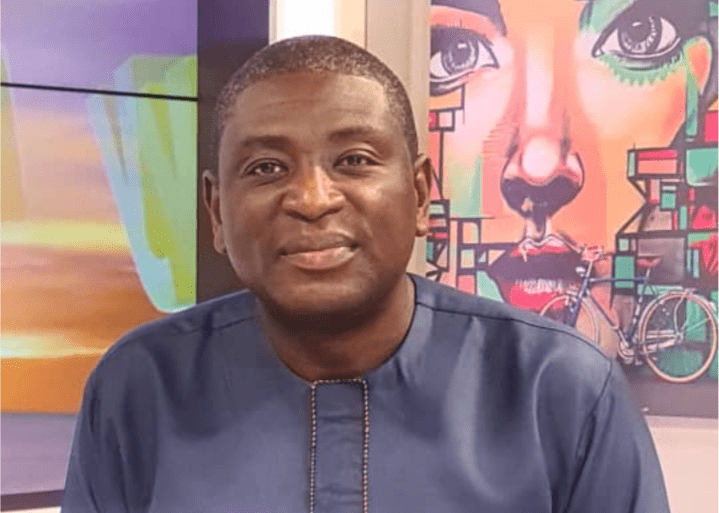
“ECG had their own power purchase agreement within which they operate and they have arranged and signed off in agreement with these independent power producers (IPPs). If at any point in time these IPPs are generating far in excess of what you need for your concessionary area, then somebody calls you to tell you that you need maybe 2000 megawatts for your concessionary arear, the power purchase agreement you have signed with the IPPs are producing 3000, but you, that you only need 2000 that you signed agreement, manage load of let’s say 200 megawatts.
Advertisement
“ECG is saying that why should I manage the load because my contractual obligation is being met and I should be able to get power for my customers,” he explained on The Key Points on Saturday, April 20.
Addressing concerns regarding ECG’s failure to release a load-shedding timetable amidst ongoing erratic power supply, the NPP communicator stated that ECG’s approach to managing power outages involves more than simply publishing a load-shedding timetable.
He emphasized that the creation of a load-management schedule involves numerous considerations and complexities.
Mr. Nsafoah referenced ECG’s statement, which highlighted that the Ghana Grid Company Limited (GRIDCo) provides ECG with restricted timeframes for notifying them of generation shortfalls at their bulk supply points (BSPs), leading to power outages.
He also rejected the notion that the country’s power challenges are primarily due to a shortage of funds to purchase fuel.
Leave a Reply