
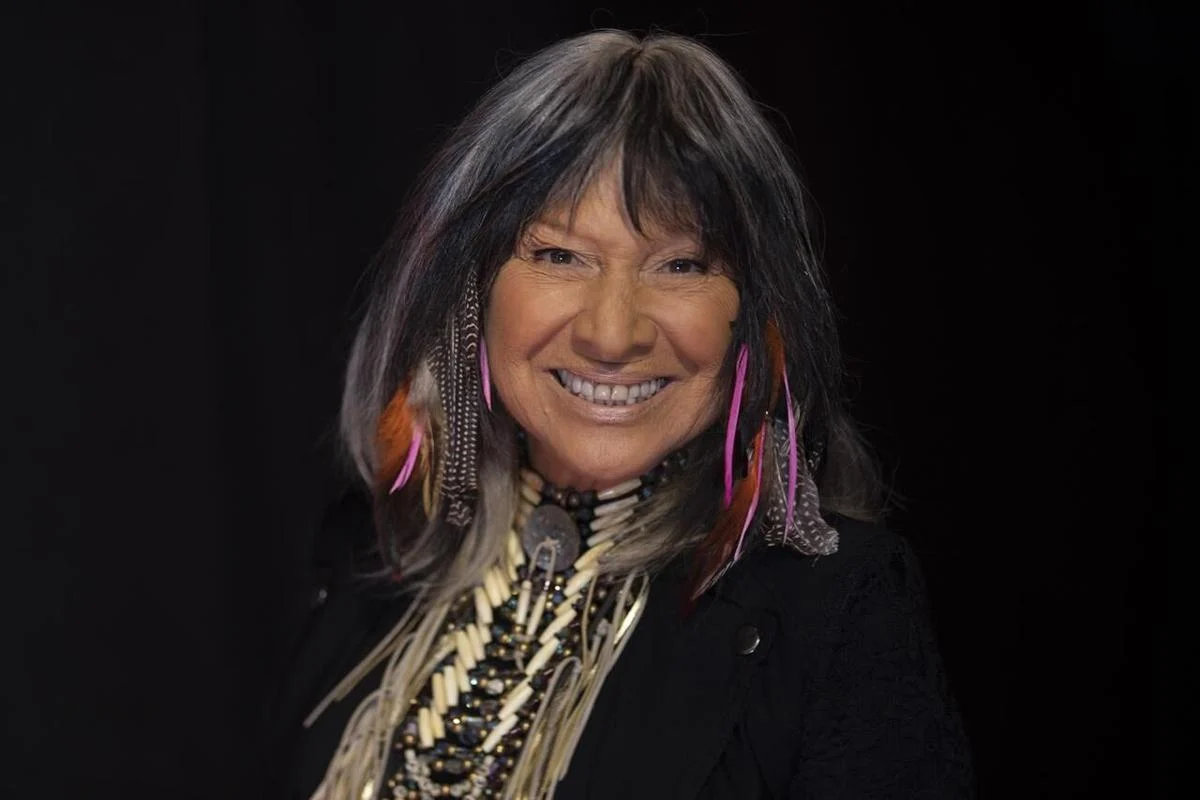
Buffy Sainte-Marie, the iconic singer-songwriter and activist, is not only known for her powerful music but also for her extraordinary life journey.
Advertisement
Central to her story are her parents, Winifred and Albert Sainte-Marie, who played pivotal roles in shaping her life and the remarkable woman she became.
Buffy Sainte-Marie was born in 1941 on the Piapot 75 reserve in the Qu’Appelle Valley, Saskatchewan, Canada. She was born to Cree parents, and her indigenous heritage would become a cornerstone of her identity and work.
However, her early life took an unexpected turn when, at the tender age of two or three, she became a victim of the Sixties Scoop.
The Sixties Scoop was a government policy that forcibly separated indigenous children from their families, communities, and cultures, placing them with non-First Nations families. Buffy Sainte-Marie was no exception.
She was adopted by Albert and Winifred Sainte-Marie, an American couple hailing from Wakefield, Massachusetts. While Buffy may have appeared “visibly white,” her adoptive mother, Winifred, self-identified as part Mi’kmaq, a testament to the complexity of identity and heritage.
Advertisement

Buffy’s upbringing was far from ordinary, as her adoptive family instilled in her the values of love, respect, and a deep appreciation for her roots.
Despite these challenges, Buffy Sainte-Marie’s journey was a remarkable one. She attended the University of Massachusetts Amherst, where she earned degrees in teaching and Oriental philosophy.
In 1964, her life took an even more incredible turn when she returned to the Piapot Cree reserve in Canada for a powwow. It was during this visit that she was warmly welcomed back into her Cree Nation’s embrace.
She was adopted, within a Cree Nation context, by Emile Piapot, the youngest son of Chief Piapot, and his wife, Clara Starblanket Piapot. This heartfelt reunion further enriched her cultural identity and solidified her place in Native culture.


Leave a Reply