
Author: Gloria Irabor
-

Sven-Göran Eriksson nationality: What nationality is Sven Eriksson?
Sven-Göran Eriksson, born in 1948, transcends borders as a football managerial maestro from Sweden. His playing days may have been unremarkable, but Eriksson’s managerial prowess etched an indelible mark on the beautiful game. Between 1977 and 2001, Eriksson’s managerial journey sparkled with success in Sweden, Portugal, and Italy, accumulating an impressive 18 trophies, including the…
-
Sven-Göran Eriksson: Ex-England manager says he has ‘about a year’ to live following terminal cancer diagnosis
Football luminary Sven-Göran Eriksson has disclosed his battle with terminal cancer, setting a poignant tone for the football community. The 75-year-old, renowned for steering the English national team through historic World Cup and European Championship journeys, now faces an opponent more formidable than any on the pitch. Eriksson’s illustrious 42-year career, woven through clubs like…
-
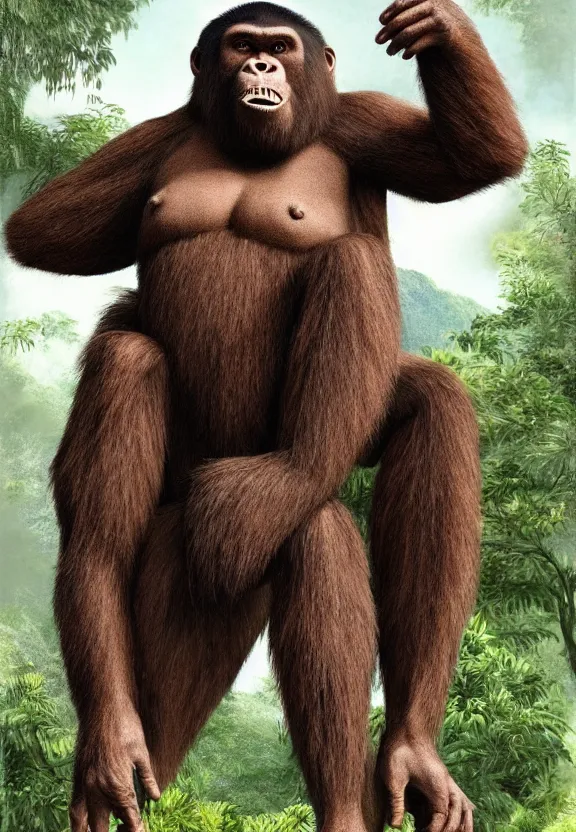
Did Gigantopithecus have any predators? What are predators of Gigantopithecus?
In the ancient landscapes, Gigantopithecus, the colossal ape towering at 3 meters and weighing over 500 kg, stood as a colossal figure of strength and size, likely shielding itself from routine predation by most creatures. The sheer magnitude of its form would have deterred many potential adversaries. Yet, lurking in the folds of prehistoric existence,…
-
Is Gigantopithecus a dinosaur? What does Gigantopithecus eat?
The Gigantopithecus wasn’t a dinosaur, but a giant that walked the Earth 2 million to 350,000 years ago. Standing over 10 feet tall, weighing 1,200 pounds, Gigantopithecus was no reptile; it was a giant ape kin to modern orangutans, carving its place in history as the largest primate. However, against the colossal backdrop of Brachiosaurus…
-
What are Gigantopithecus good for? How long did Gigantopithecus live?
Millions of years ago, the colossal Gigantopithecus roamed Southeast Asia, a giant ape with a modest impact on its ecosystem. While its existence was marked by a simple pursuit of fruit and bamboo, the fossils left behind by Gigantopithecus have become treasures for scientific exploration. These remnants offer vital insights into primate evolution, shedding light…
-
Were Gigantopithecus friendly? Were Gigantopithecus peaceful?
Determining the friendliness of Gigantopithecus poses a challenge, given their extinction millions of years ago. Without direct evidence of temperament, scientists rely on clues from anatomy and living relatives. The immense jaws and size hint at potential formidability, yet their diet of fruits and bamboo suggests a likely herbivorous and peaceful lifestyle. Drawing parallels with…
-
Who would win Gigantopithecus vs bear?
Predicting the outcome of a Gigantopithecus versus bear confrontation requires careful consideration of their respective strengths and weaknesses. The Gigantopithecus, towering at 12 feet and weighing up to 1,200 pounds, boasts immense strength, a formidable bite force, and a potential ability to walk bipedally. However, it lacks specialized weaponry, potentially making it less equipped for…
-
How did Gigantopithecus walk?
In Gigantopithecus’ locomotion, the fossil evidence presents a tantalizing puzzle for scientists. The limitations of available fossils shroud the giant ape’s walk in uncertainty, leaving researchers to unravel its mysteries through a blend of anatomical analysis and comparisons with its living kin. Exploring the possibilities, the suggestion of knuckle-walking arises, echoing the familiar gait of…
-
Is Gigantopithecus alive in China?
In the ancient landscapes of southern China, Gigantopithecus once roamed, an awe-inspiring giant that walked the Earth some 300,000 years ago. Regrettably, this colossal ape, with a stature double that of a gorilla, now rests in the annals of extinction. The extinction of Gigantopithecus is attributed to a changing world – a shift in climate…
-
Who would win Gigantopithecus or lion?
Predicting the outcome of a showdown between a Gigantopithecus and a lion proves challenging due to their vast temporal and ecological differences. The Gigantopithecus, with an estimated weight ranging from 300-600 kg, boasts a powerful bite force and likely arboreal agility. However, being primarily herbivorous and lacking comprehensive data on its fighting behavior pose potential…
