
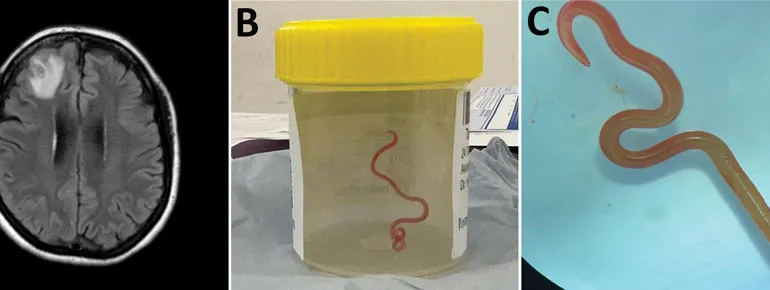
Unveiling the Perils: Examining the Impact of Brain Worms and Potential Human Transmission
Advertisement
The mysterious realm of brain worms has stirred both fascination and concern, prompting questions about their potential harm and the likelihood of transmission to humans. As we venture into the depths of this topic, a complex narrative emerges, highlighting the potential consequences of brain worm infestations and the intricate web of interconnections they create.
Within the labyrinthine passages of the brain, the maturation of brainworm larvae into adults marks a phase of preparation for reproduction. These organisms strategically lay their eggs, whether on the dura mater—a protective layer encompassing the brain and spinal cord—or directly into the bloodstream of their host, frequently deer. This intricate process sets the stage for a journey that takes the larvae through a remarkable transformation.
However, the impact of brain worms on their hosts cannot be underestimated. As the larvae encyst in various parts of the body, including the brain, the repercussions can be severe and diverse. Tissue damage, paralysis, blindness, and even death can result from the presence of these encysted larvae. The body’s intricate neurological system can fall victim to the invasive behavior of these organisms, leading to a range of debilitating outcomes.
Advertisement
A study led by Tajie Harris, PhD, sheds light on the body’s intriguing ability to manage a common brain parasite that is often spread through cats and contaminated meat. While over 30 million Americans might carry this brain parasite, the majority remain asymptomatic, providing a unique perspective into the intricate relationship between host and parasite. The findings from this study have far-reaching implications, not only for brain infections but also for the understanding of neurodegenerative diseases and other health concerns.
The query of whether humans can acquire brain worms from animals adds another layer of complexity to the narrative. While the likelihood of direct transmission between animals and humans is limited, the potential for exposure to environments and vectors carrying brain worms cannot be entirely disregarded. Vigilance in maintaining hygiene and minimizing contact with sources of potential contamination remains essential.
As the curtain is slowly drawn back on brain worms and their potential consequences, the intricate balance between curiosity and caution becomes apparent. The world of brain parasites presents both insights into the complexities of host-parasite relationships and a reminder of the fragility of the human neurological system. As researchers continue to uncover the hidden aspects of these organisms, a more comprehensive picture of their impact on both animal and human health emerges, guiding us toward better understanding and mitigation strategies.
Leave a Reply