

Who were the major players in the discovery of the cosmic microwave background? – The discovery of the cosmic microwave background (CMB) radiation in 1965 marked a pivotal moment in the realm of astrophysics.
Advertisement
While Arno Penzias and Robert Wilson stand as the primary figures in this groundbreaking achievement, the journey involved a collaborative effort with several major players playing crucial roles.
At Bell Labs: Engineering Excellence and Supervisory Insight
Ralph A. Müller: The Architect of “Big Horn”
Ralph A. Müller played a pivotal role in the discovery by designing and constructing the horn-shaped antenna, affectionately named “Big Horn.” This highly sensitive antenna, meticulously engineered by Müller, became the instrumental tool that Penzias and Wilson used to detect the faint CMB radiation. His engineering prowess ensured the exceptional performance of the antenna, laying the foundation for the groundbreaking discovery.
Bernard G. Burke: Guiding the Radio Astronomy Group
As the head of the radio astronomy group at Bell Labs, Bernard G. Burke served as the supervisor for Penzias and Wilson. His crucial support and encouragement throughout their research proved instrumental in recognizing the potential significance of the unexpected signal they stumbled upon. Burke’s guidance played a key role in shaping the trajectory of the CMB discovery.
Thomas A. Matthews: Independent Corroboration
Thomas A. Matthews, a radio astronomer, independently detected a similar signal around the same time as Penzias and Wilson. Although his findings were not published first, Matthews’ work served as independent corroboration, reinforcing the case for the existence of CMB. His contributions added weight to the groundbreaking discovery.
Advertisement
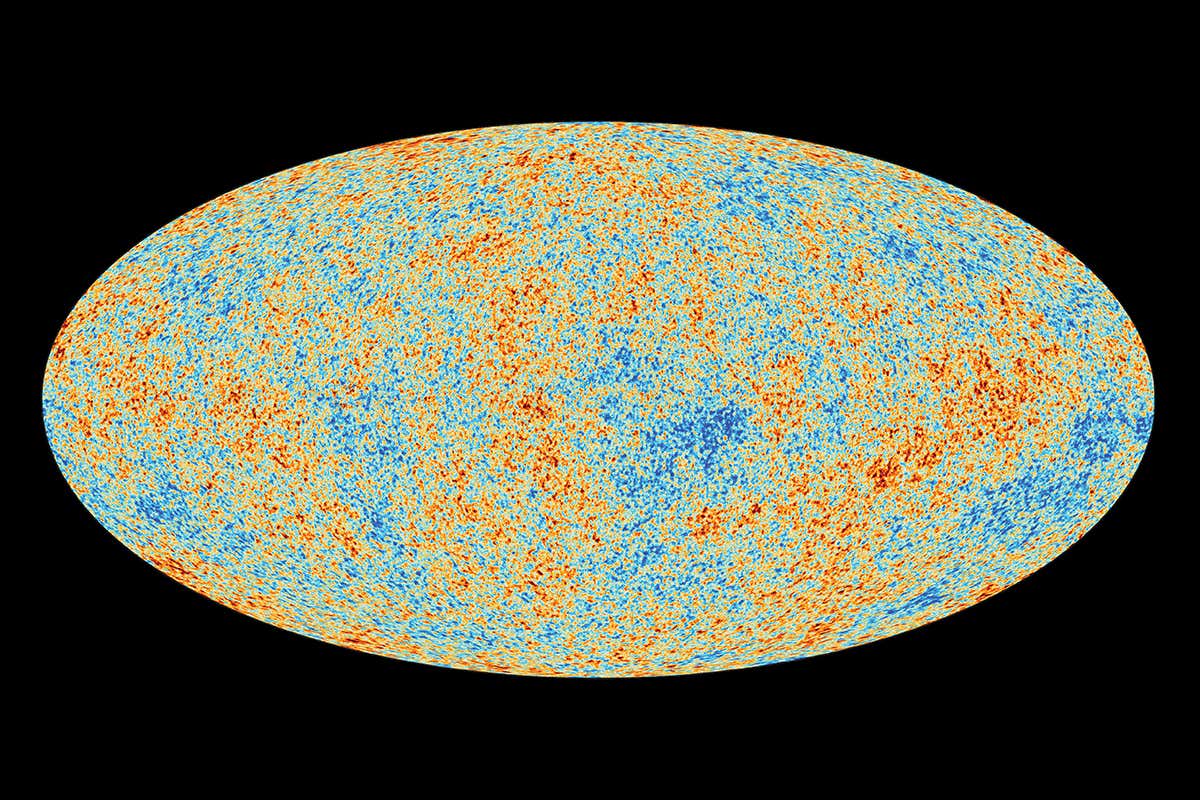
From the Theoretical Side: Predicting the CMB
Ralph Alpher and Robert Herman: Pioneering Theoretical Framework
In 1948, Ralph Alpher and Robert Herman laid the theoretical groundwork for the CMB by predicting its existence as a byproduct of the Big Bang. Their visionary theoretical work, predating the actual detection by decades, provided the crucial framework for interpreting Penzias and Wilson’s observations. Alpher and Herman’s insights were foundational to understanding the cosmic microwave background.
George Gamow: A Cosmological Pioneer
George Gamow, alongside Alpher and Herman, contributed significantly to the development of the Big Bang nucleosynthesis theory. This theory not only predicted the abundance of light elements in the universe but also supported the broader Big Bang model. Gamow’s theoretical contributions aligned with the eventual empirical evidence, strengthening the case for the cosmic microwave background.
Additional Contributors: Collaborative Discoveries and Ongoing Research
Robert H. Dicke and Princeton University: Interpreting Findings
Robert H. Dicke and his research group at Princeton University were independently searching for the CMB when they became aware of Penzias and Wilson’s discovery. Recognizing the significance of the findings, Dicke and his team played a crucial role in interpreting the results within the context of the Big Bang theory, contributing to the broader understanding of the cosmic microwave background.
Subsequent Generations of Astronomers: Advancing Knowledge
Since the initial discovery, countless scientists have contributed to the study of the CMB in increasing detail. Using sophisticated telescopes and advanced techniques, subsequent generations of astronomers have built upon the foundational work of Penzias, Wilson, and their collaborators. Their observations have provided invaluable insights into the early universe, refining our understanding of its composition, expansion history, and structural dynamics.
In conclusion, the discovery of the cosmic microwave background was a collaborative endeavor that extended beyond the efforts of Penzias and Wilson. Engineers, theorists, astronomers, and future generations of researchers all played integral roles in unraveling the mysteries of the universe.
Leave a Reply