
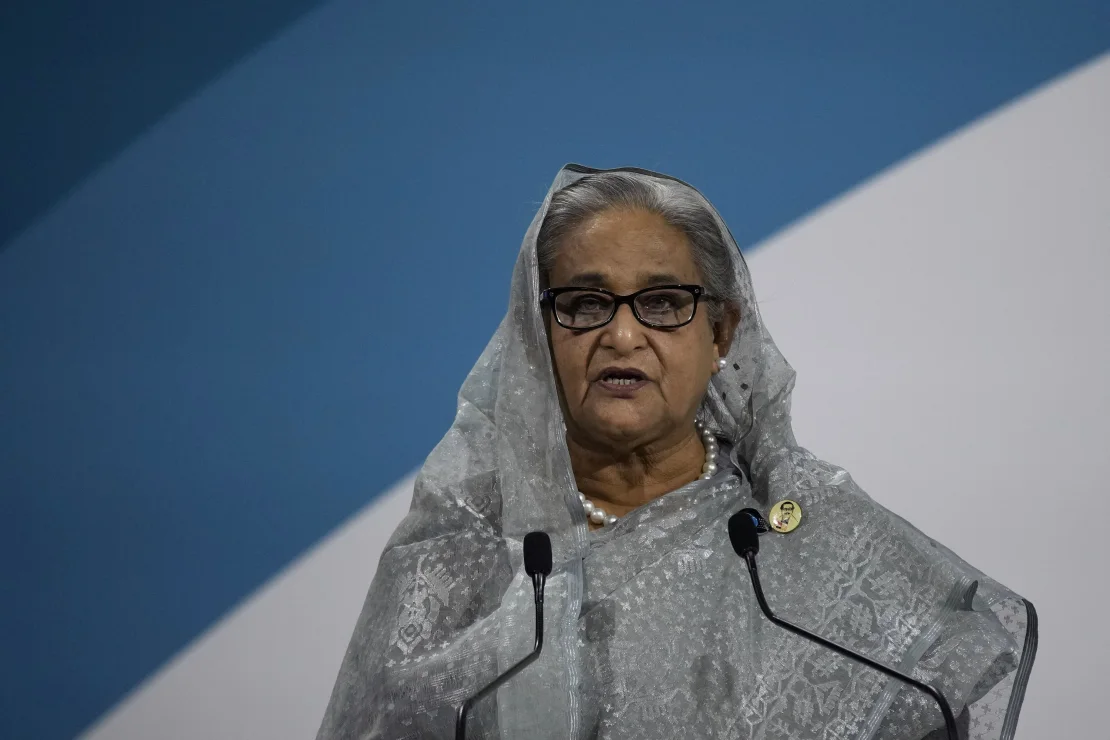
Sheikh Hasina Wazed is a Bangladeshi former politician who served as the tenth prime minister of Bangladesh from June 1996 to July 2001 and again from January 2009 to August 2024.
Advertisement
Early Life
Sheikh Hasina Wazed was born on September 28, 1947, in Tungipara, East Bengal (now Bangladesh).
She is the daughter of Sheikh Mujibur Rahman, the founding father and first president of Bangladesh, and Begum Fazilatunnesa Mujib.
Her family has Iraqi Arab ancestry, tracing back to the Muslim preacher Sheikh Abdul Awal Darwish. Hasina’s early childhood was spent under the care of her mother and grandmother in Tungipara.
The family later moved to Dhaka, where Sheikh Mujibur Rahman’s political activities increasingly influenced their lives.
Education and Marriage
Hasina attended primary school in Tungipara and later studied at Azimpur Girls’ School and Begum Badrunnesa Girls’ College in Dhaka. She enrolled at Eden College, where she served as the Vice President of the Students Union from 1966 to 1967.
In 1967, she married M. A. Wazed Miah, a Bengali nuclear scientist. Hasina completed her bachelor’s degree in Bengali literature at Dhaka University in 1973, where she was involved in student politics.
Family Tragedy and Exile
In August 1975, Sheikh Mujibur Rahman and most of his family were murdered during a coup d’état. At the time, Hasina, her husband, and sister Sheikh Rehana were visiting Europe and sought asylum in India.
They lived in New Delhi for six years. After being elected President of the Awami League in February 1981, Hasina returned to Bangladesh on May 17, 1981, receiving a warm welcome from her party supporters.
Advertisement
Political Career
Sheikh Hasina first served as Prime Minister of Bangladesh from June 1996 to July 2001. During this term, the country saw economic growth and reduced poverty, though it was marked by political turmoil.
After losing the 2001 election, she became the leader of the opposition and was involved in protests against the Bangladesh Nationalist Party (BNP).
In 2008, Hasina returned to power after winning the general election. She was re-elected in 2014 amid a boycott by the BNP and criticisms of electoral fraud.
Her government received praise for providing refuge to Rohingya refugees in 2017. Hasina won a fourth term in 2018 and a fifth term in 2024, though these elections were marred by violence and allegations of fraud.
Controversies and Achievements
Hasina’s long tenure has been marked by accusations of democratic backsliding, including enforced disappearances and curbs on press freedom.
Critics have also accused her of being too close to India, impacting Bangladesh’s sovereignty. Despite these controversies, Hasina was listed among Time’s 100 most influential people in 2018 and Forbes’ most powerful women from 2015 to 2022.
She is recognized as the world’s longest-serving female head of government.
Exile and Final Term
In 2024, Sheikh Hasina’s premiership ended amid violent protests and her subsequent exile. Despite the turbulent end to her political career, Hasina’s impact on Bangladesh’s politics and development remains significant.
Leave a Reply