
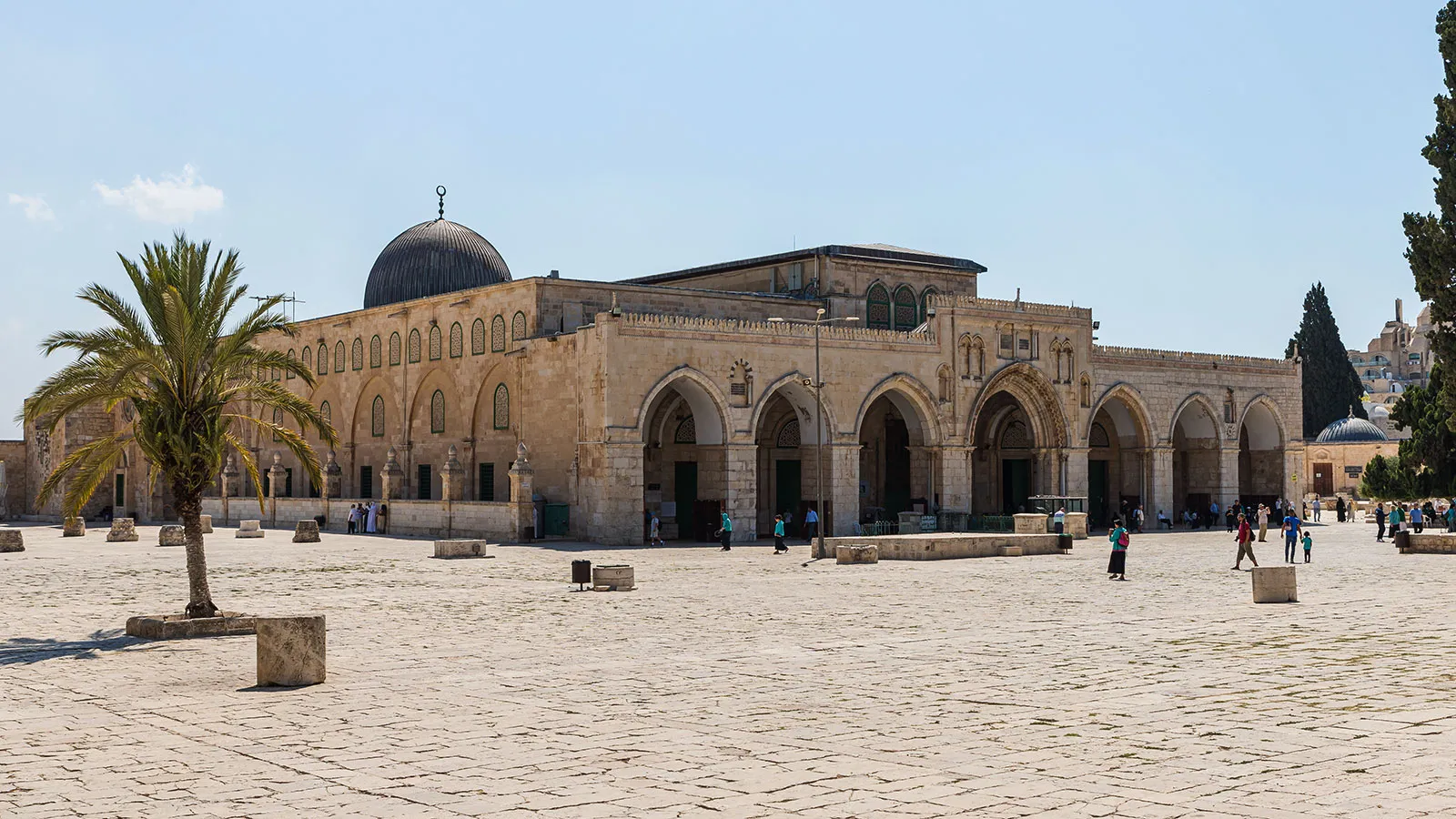
The Al-Aqsa Mosque is a mosque located in the Old City of Jerusalem and is considered the third holiest site in Islam after Mecca and Medina. The mosque was originally built by Caliph Umar in 638 CE, just a few years after the Muslim conquest of Jerusalem.
Advertisement
The name “Al-Aqsa” means “the farthest mosque” and comes from a story in the Quran called “The Night Journey”. In the story, Prophet Muhammad travels from Mecca to Jerusalem, where he ascends to heaven and meets with other prophets before returning to Mecca.
The mosque is situated on the Temple Mount, which is also known as Haram al-Sharif. The compound contains several other important religious sites, including the Dome of the Rock, which is believed to be the spot where Prophet Muhammad ascended to heaven.
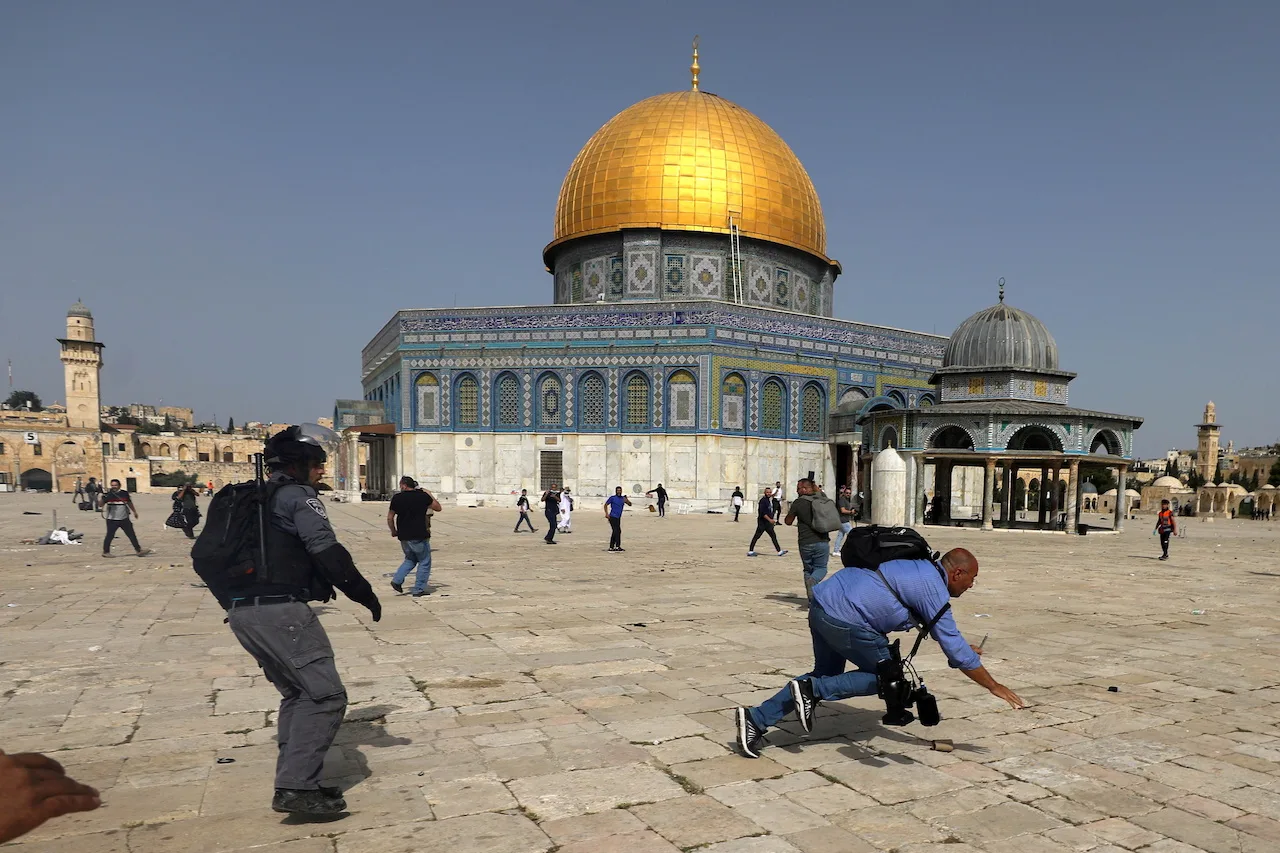
The Al-Aqsa Mosque has undergone several renovations and expansions over the centuries. The present-day mosque was originally built by the fifth Umayyad caliph Abd al-Malik or his successor al-Walid I (or both) as a congregational mosque on the same axis as the Dome of the Rock, a commemorative Islamic monument.
Advertisement
After being destroyed in an earthquake in 746, the mosque was rebuilt in 758 by the Abbasid caliph al-Mansur. It was further expanded upon in 780 by the Abbasid caliph al-Mahdi, after which it consisted of fifteen aisles and a central dome.
However, it was again destroyed during the 1033 Jordan Rift Valley earthquake. The mosque was rebuilt by the Fatimid caliph al-Zahir (r. 1021–1036), who reduced it to seven aisles but adorned its interior with an elaborate central archway covered in vegetal mosaics; the current structure preserves the 11th-century outline.
The Al-Aqsa Mosque holds great significance for Muslims around the world as it is believed to be one of the first Qibla (direction of prayer) for Muslims before it was changed to Mecca. It is also believed that Prophet Muhammad led prayers at this site during his miraculous journey from Mecca to Jerusalem.
Leave a Reply