
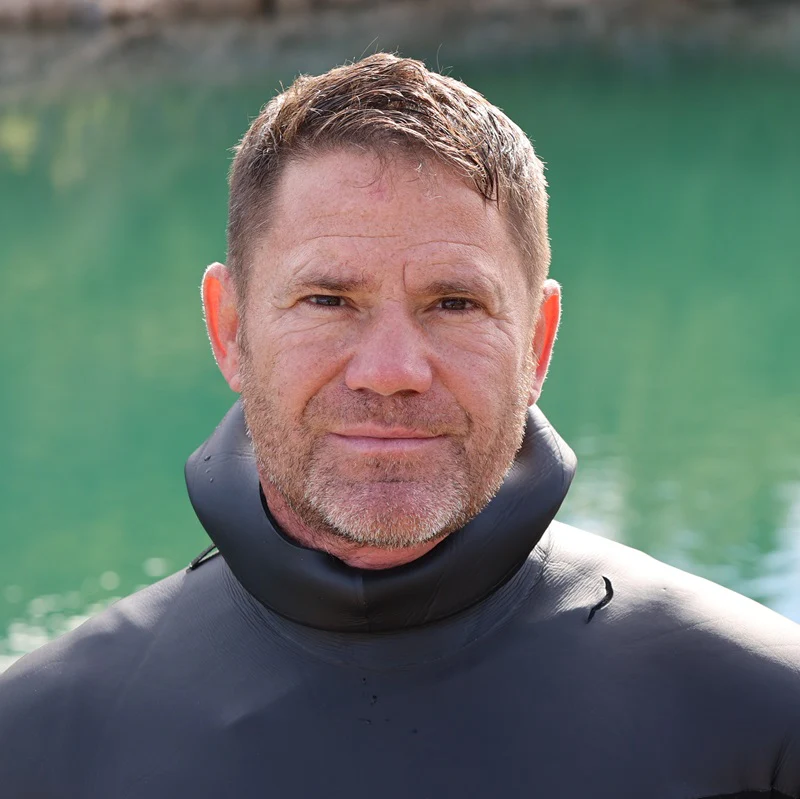
Steve Backshall has a brother named Jo Backshall. However, there isn’t much information about him as he likes to keep his personal life away from the limelight.
Advertisement
Backshall’s early career began with writing for Rough Guides, focusing on Indonesia and Southeast Asia. His passion for adventure and exploration quickly led him to the world of television, where he made a name for himself as a fearless and knowledgeable presenter.

Backshall’s television career took off when he joined National Geographic in 1998 as an ‘Adventurer in Residence.’ He produced and presented various series, including “Game For It” and “EarthPulse.” One of his notable early expeditions was attempting to walk solo across New Guinea’s western half, an endeavour that, although unsuccessful, marked the beginning of his adventurous pursuits.
Advertisement
In 2003, Backshall joined the BBC’s “The Really Wild Show,” where he travelled across Australia, Central America, the Galapagos, and Southern Africa, showcasing his talent for bringing wildlife to viewers. His work on “Expedition Borneo” in 2005, where he explored new species and cave passages, further solidified his reputation.
In 2008, Backshall’s “Deadly 60” series was commissioned, featuring him seeking out the world’s most dangerous animals. The series aimed to inspire children to engage with wildlife and adventure. Backshall’s daring encounters with creatures like great white sharks, king cobras, and caimans captivated audiences worldwide. The series was broadcast in 157 countries, and its success led to several offshoots, including “Deadly Pole to Pole.”
Backshall’s expeditions have taken him to some of the most remote and challenging locations on Earth. In “Lost Land of the Jaguar” (2008), he led the first expedition to climb Mount Upuigma, discovering new species along the way. “Lost Land of the Volcano” (2009) saw him exploring the crater of Mount Bosavi in Papua New Guinea, where he found the Bosavi woolly rat, one of the largest rat species in the world.
Leave a Reply