
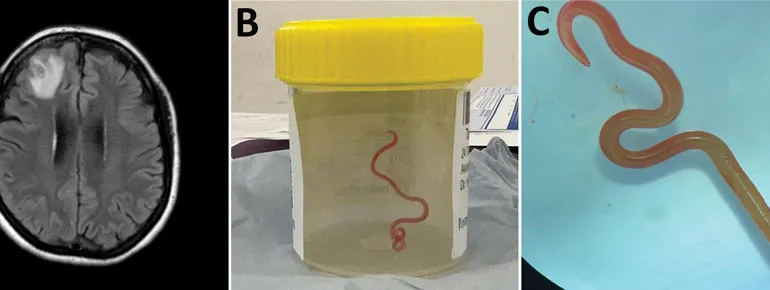
How do people get brain worms? How do humans get brain worms? How do you know if you have worms?
Advertisement
The intricate and perplexing world of parasitic infections has once again come to the forefront, prompting a deeper understanding of how humans can become unwitting hosts to these elusive creatures. The question of how brain worms find their way into the human body has garnered attention as medical experts delve into the complexities of these infestations. Furthermore, understanding the signs of such infections becomes crucial in ensuring early detection and appropriate treatment.
The journey of brain worms, also known as parasitic nematodes, into the human body is a tale of intricate interactions. One common species of concern is Parelaphostrongylus tenuis, which is typically found in white-tailed deer. Within the deer’s natural environment, the life cycle of these worms involves laying eggs on the dura mater, the outermost layer of the meninges that envelop the brain and spinal cord, or directly into the deer’s bloodstream. These eggs eventually hatch into larvae, embarking on a complex journey within the deer’s body.
However, the concern arises when these parasitic nematodes find an unconventional host—humans. While such instances are relatively rare, they do occur and often result in a condition known as neurocysticercosis. This condition manifests when the larval cysts of these worms develop in the human brain, leading to a range of neurological symptoms. The route of infection, as elucidated by the US Centers for Disease Control and Prevention (CDC), involves the inadvertent consumption of eggs found in the feces of a person carrying an intestinal tapeworm.
Advertisement
This intricate cycle underscores the importance of maintaining good hygiene and sanitation practices to minimize the risk of such infections. Basic precautions such as washing hands thoroughly after using the restroom and consuming properly cooked food can significantly reduce the likelihood of inadvertently ingesting parasite eggs.
Detecting the presence of parasitic infections, including brain worms, is a matter of vigilance and awareness. Symptoms can vary depending on the specific parasite and the affected individual. Threadworms, also known as pinworms, serve as an example of common parasitic infections that can afflict humans. These worms typically cause itching and discomfort around the anal area. Individuals infected with threadworms might experience an itchy bottom, redness, and scratch marks in the vicinity. Children with threadworm infections might exhibit irritability, disrupted sleep patterns, and a decreased appetite. Notably, threadworms emerge from the anus at night to lay eggs between the buttocks, leading to intense itching.
Early identification of these symptoms is essential in seeking prompt medical attention and intervention. Medical professionals can conduct tests and examinations to accurately diagnose the presence of parasitic infections and tailor appropriate treatment strategies.
As the scientific community continues to delve into the intricate world of parasitic infections, understanding the pathways through which humans can become hosts to these creatures remains a critical endeavor. The key to prevention lies in education, awareness, and practicing good hygiene habits. Ultimately, by arming ourselves with knowledge about these often unseen adversaries, we can better protect ourselves and our communities from the enigmatic world of parasitic infections.
Leave a Reply