
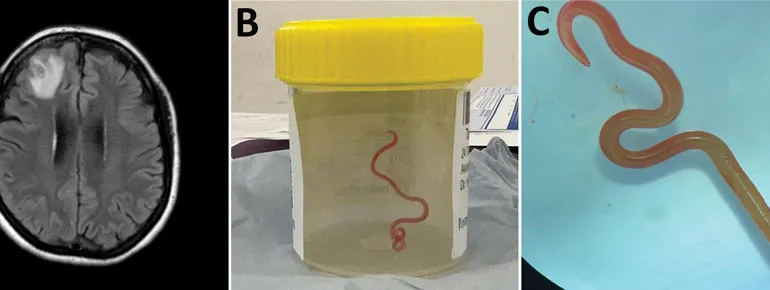
Unraveling the Enigma: The Intricate Functions of Brain Worms and Neurological Control
Advertisement
Within the complex and mysterious realm of neurobiology, a captivating phenomenon has caught the attention of scientists and researchers: brain worms. These enigmatic organisms, often associated with neurological parasites, have intrigued experts as they navigate the delicate terrain of the human brain, prompting questions about their functions and impacts.
The life cycle of these brain-invading creatures is both intricate and fascinating. As larvae, they find their initial home within the brain and gradually mature into adulthood, all while preparing for reproduction. The adult worms take a unique approach to reproduction, laying eggs on the dura mater—a protective layer encompassing the brain and spinal cord—or even directly into the host’s bloodstream. Upon hatching, these larvae embark on a journey through the bloodstream, establishing a complex relationship with their host’s physiology.
In certain cases, the journey of these worms takes an unexpected turn. Rather than adhering to a benign existence, they navigate their way through the brain and spinal cord, inducing severe neurological ailments that can ultimately lead to death. This ominous scenario raises a plethora of questions about the mechanisms these worms employ to manipulate the brain and influence neurological functions.
Advertisement
Parelaphostrongylus tenuis, commonly known as the deer brain worm, has garnered attention due to its potential impact on various species. The worm’s presence might play a significant role in shaping animal habitats. As deer serve as hosts, with adult worms laying their eggs in the dura mater or bloodstream, species like mule deer, elk, and caribou might be discouraged from inhabiting regions teeming with white-tailed deer—a crucial link in the intricate chain of ecosystems.
However, the intrigue surrounding brain-controlling organisms doesn’t stop at Parelaphostrongylus tenuis. One of the most prominent and debated neurological parasites is Toxoplasma gondii. This complex microorganism, known for its role in the disease toxoplasmosis, has sparked controversies and discussions due to its potential influence on human behavior. While studies suggest a potential correlation between Toxoplasma gondii infection and altered behaviors, the precise mechanisms and implications remain subjects of ongoing research and debate.
As scientists delve deeper into the world of brain-invading organisms, their intricate life cycles, and potential neurological effects, the veil of mystery surrounding these creatures gradually lifts. However, with each answer unearthed, new questions arise, underscoring the dynamic and evolving nature of scientific exploration in the field of neurobiology. The more we uncover about brain worms and their ability to control neurological functions, the clearer the picture becomes of the complex interplay between parasites and the delicate human brain.
Leave a Reply