
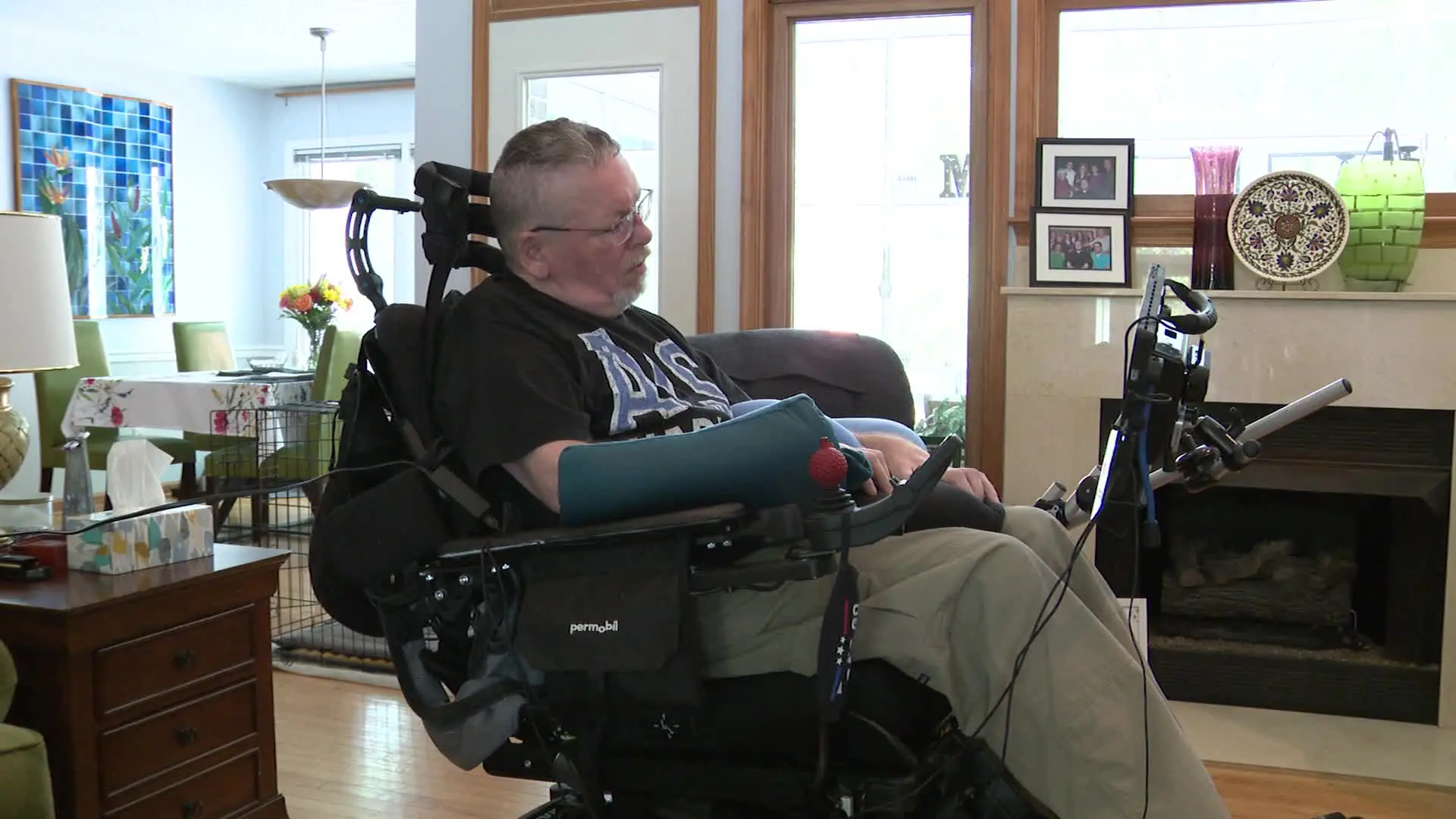
ALS is a progressive disease that does not go into remission. It is terminal, usually within 2-5 years after diagnosis, however, some people have lived with ALS for 10 years or longer.
Advertisement
In ALS, weakness gradually worsens as the motor neurons in the spinal cord degenerate. The last stage of ALS, known as the end-stage or advanced stage, is characterized by severe muscle weakness, paralysis, and profound disability.
Advertisement

ALS primarily targets motor neurons, the nerve cells responsible for transmitting signals from the brain to muscles throughout the body. As these motor neurons degenerate and die, the muscles they innervate weaken and waste away.
However, as the disease progresses, patients may experience difficulty speaking, swallowing, and performing everyday tasks. Respiratory muscles may also be affected, resulting in breathing difficulties and respiratory failure.
The risk of developing ALS increases with age and is higher for men than women. ALS can affect any part of the body, but it often starts in the hands, feet, arms, or legs.
Leave a Reply