
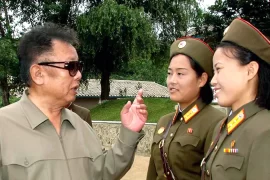
Kim Jong-il had been his father’s designated successor as early as 1974, named commander-in-chief in 1991, and became Supreme Leader upon his father’s death. He officially took over his father’s old post as General Secretary of the Workers’ Party of Korea on 8 October 1997.
Advertisement

How long was Kim Jong Il in power?
(Seoul) – The 10th anniversary of the death of North Korea’s supreme leader Kim Jong Il should focus global attention on the brutal rule of his son Kim Jong Un, Human Rights Watch said today. Kim Jong Il died on December 17, 2011.
Advertisement
During the 10 years since his father’s death, Kim Jong Un has expanded invasive surveillance and repression of North Koreans, denied people their freedom of movement within the country and across borders, and responded to the Covid-19 pandemic with heightened food insecurity that threatens widespread starvation.
“Kim Jong Il’s legacy is the deaths of hundreds of thousands, perhaps millions, of North Koreans in the 1990s,” said Lina Yoon, senior Korea researcher at Human Rights Watch. “Just like those of his father and grandfather, Kim Jong Un’s rule is based on brutality, fear, and repression, instigating systematic rights violations, economic hardship, and possible famine.”
Leave a Reply