
Berry Gordy is best known as the founder of the Motown record label and its subsidiaries, which was the highest-earning African-American business for decades.
Advertisement
As a songwriter, Berry Gordy composed or co-composed a number of hits including “Lonely Teardrops” and “That’s Why” (Jackie Wilson), “Shop Around” (The Miracles), and “Do You Love Me” (The Contours), all of which topped the US R&B charts, as well as the international hit “Reet Petite” (Jackie Wilson). Berry Gordy wrote many hit songs for The Jackson 5, including “I Want You Back” and “ABC”.
As a record producer, Berry Gordy launched the Miracles and signed acts like The Supremes, Marvin Gaye, The Temptations, The Four Tops, Gladys Knight & the Pips and Stevie Wonder.
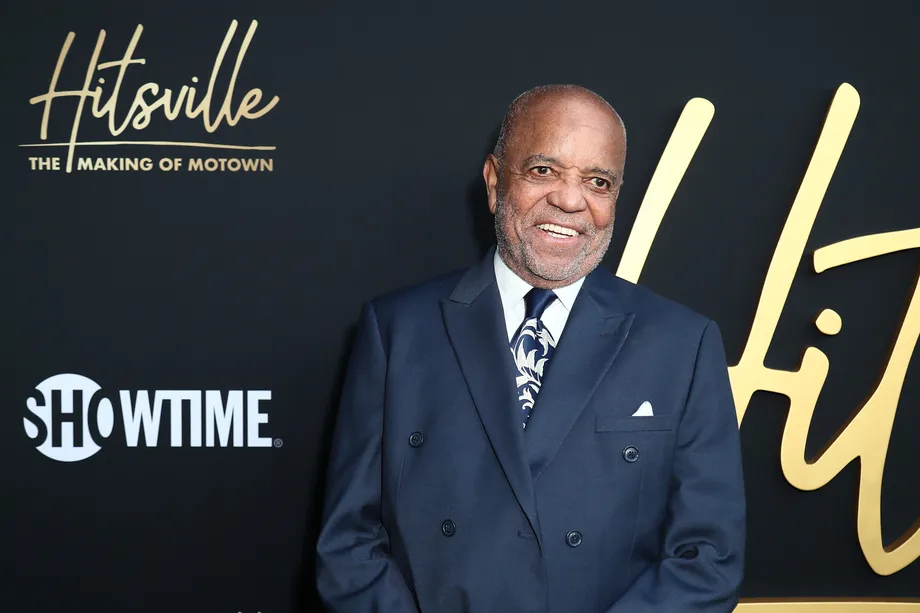
Image Source: Getty Images
What musicians did Berry Gordy make famous?
Through Motown Studio, Berry Gordy developed the majority of the great rhythm-and-blues (R&B) performers of the 1960s and ’70s, including Diana Ross and the Supremes, Smokey Robinson and the Miracles, the Marvelettes, Stevie Wonder, Marvin Gaye, the Temptations, and Michael Jackson and the Jackson Five.
Did Berry Gordy steal?
Berry Gordy has been criticized for not paying his artists enough.
However, in an autobiography called To Be Loved (Warner Books, Time-Warner Audio Books), insists that the end – the very existence of Motown – justifies the means.
Advertisement
A string of top Motown performers, from Michael Jackson to Diana Ross, deserted Gordy over the years to sign lucrative contracts with other record companies. In each case, Gordy refused to match the offer, a decision he now questions.
Berry Gordy said;
“That really did bother me the most; the accusations that I had cheated the artists, because it just wasn’t true.
“I would never cheat an artist, because I was an artist myself. That’s how I got into the business.
“And we paid everybody everything that was coming to them. But when their contracts were up, other companies made big offers, and I wouldn’t top the offers. That might have been a mistake, but I had a problem with the principle of doing that.
“When you invest in an artist for many, many, many years and then they finally make it, you’ve reached a point where you’ve done all these things for them and haven’t really made a profit. I didn’t feel I had to match anybody else’s offer. There should have been loyalties and other things that came into play.
“But there’s something else, something that people seem to forget. If I had been cheating all these artists, why did they stay with me for 20 years? They stayed because they loved me, and I loved them. If they didn’t have any money after 20 years, that wasn’t my fault.”
Leave a Reply