
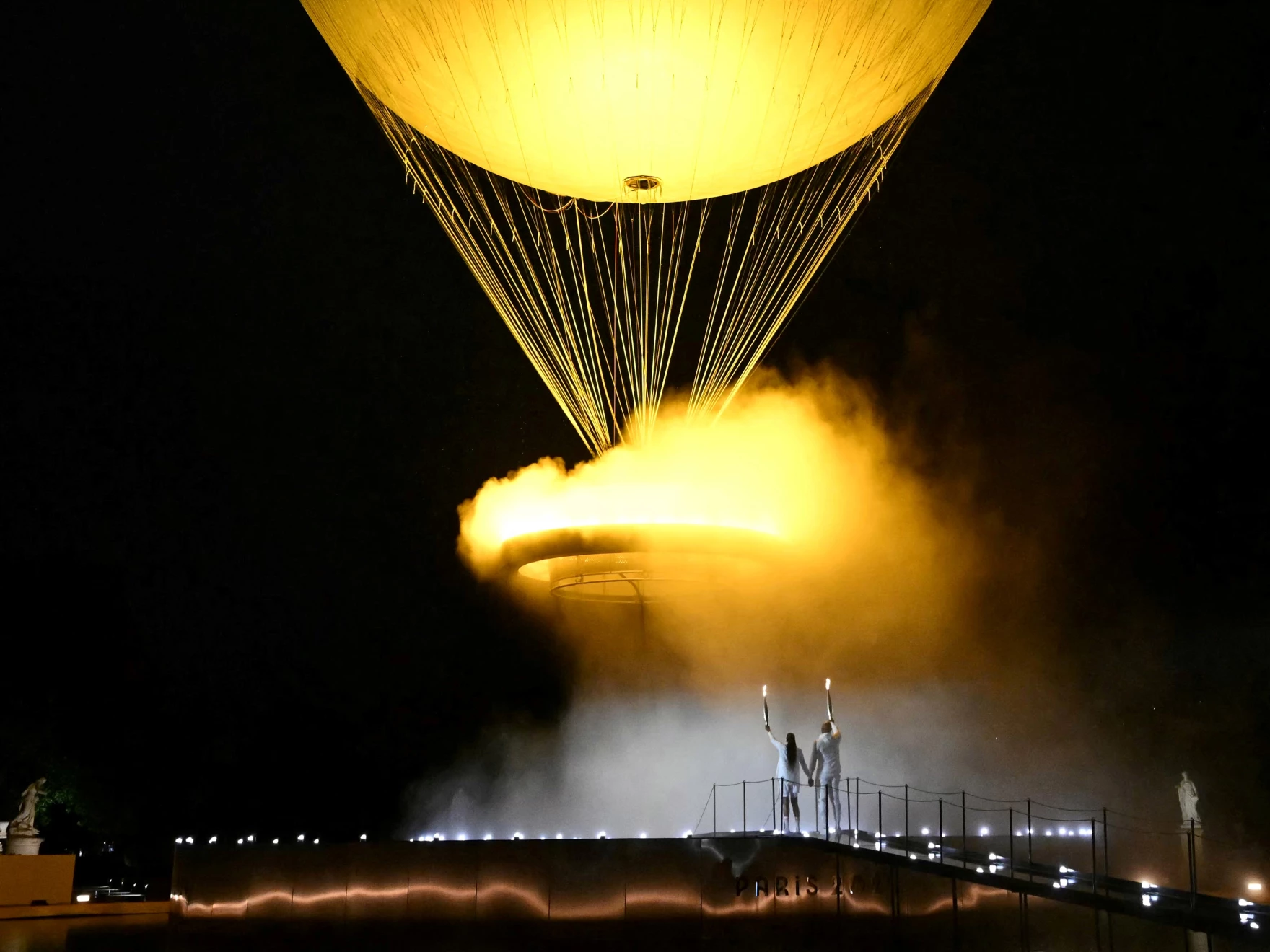
Traditionally, the Olympic cauldron has always rested firmly on the ground, its fire burning brightly throughout the Games. However, the 2024 Paris Olympics has introduced a breathtaking twist to this age-old tradition. As night falls over Paris, the Olympic cauldron defies convention by soaring approximately 200 feet into the sky, creating a stunning visual spectacle.
Advertisement
This year’s cauldron, designed by Mathieu Lehanneur, appears as a mesmerizing “ring of fire” but, intriguingly, there is no actual flame. Instead, the illusion of a blazing fire is achieved through a sophisticated interplay of mist and light. This innovative design is lifted by a balloon reminiscent of a hot air balloon, adding an ethereal quality to the display.
Lehanneur, who also crafted the Olympic torch for Paris 2024, aimed to create a cauldron that epitomizes visibility and grandeur. “The idea of a balloon ascending from the ground to the sky as day turns to night seemed like an exciting possibility,” he explained in an interview with NPR’s Morning Edition.
The eco-friendly design draws inspiration from France’s rich history of flight. The first human-carrying hot air balloon took off in Paris on November 21, 1783, and just a week later, the first manned hydrogen balloon soared from the Jardin des Tuileries—now the location of the Olympic cauldron.
Advertisement
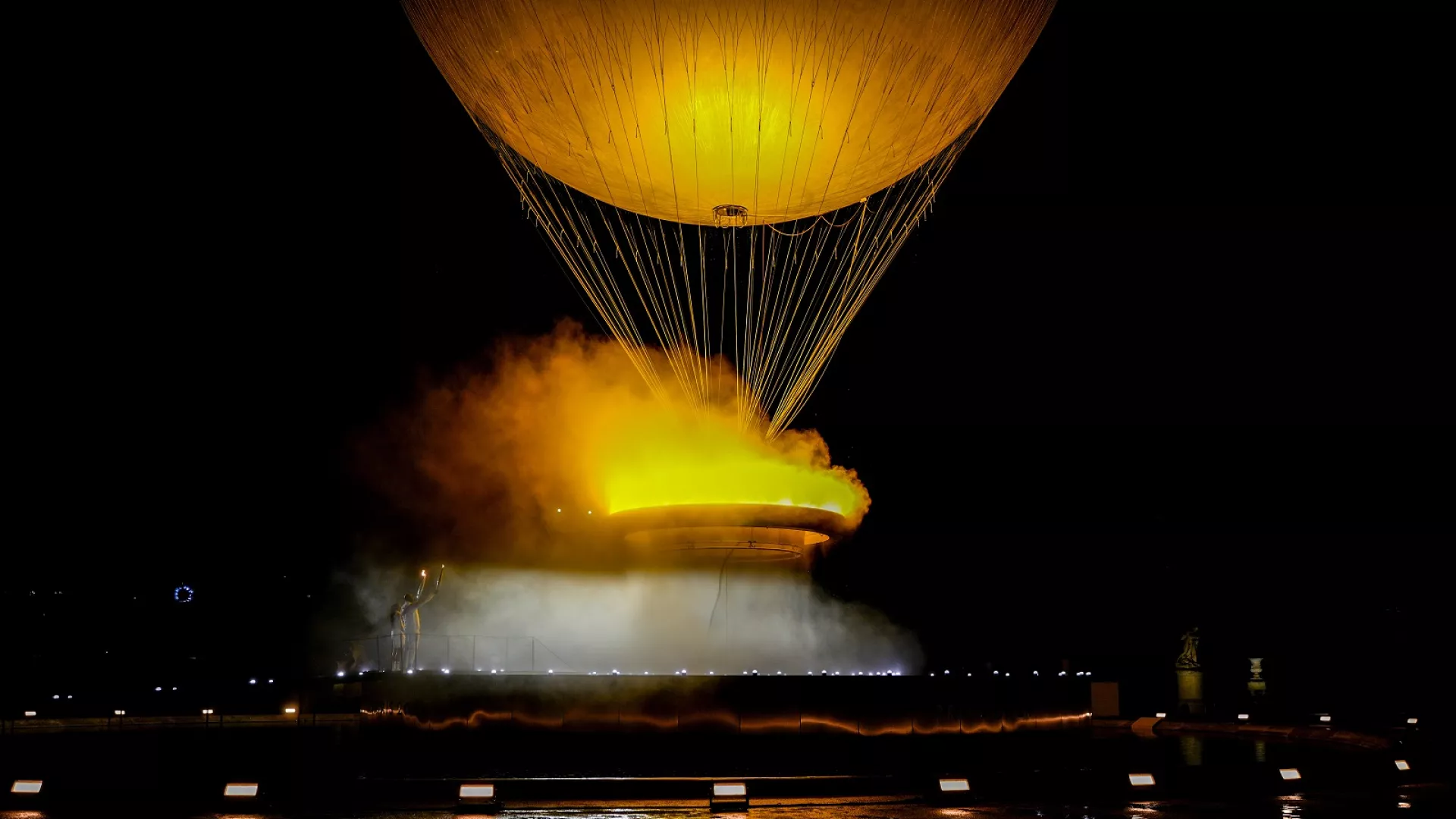
Lehanneur noted that maintaining a real flame at such a height would be impractical and unsafe due to the need for extensive gas pipelines. “This system creates a stunning visual effect by combining intense light with a misty, fog-like ambiance,” he said.
Beyond its aesthetic appeal, the flameless cauldron aligns with the Paris Olympics’ commitment to sustainability. The goal is to reduce the Games’ carbon footprint by half compared to London 2012 and Rio 2016. A real flame would require substantial gas and produce CO2, contributing to pollution and global warming—something Paris 2024 aims to avoid.
The cauldron has quickly become a must-see attraction in Paris. Each night, around 10,000 visitors, who have secured free tickets, flock to witness the cauldron’s ascent. All available tickets are sold out throughout the Games, reflecting the public’s enthusiasm.
Chris Sirac from southern France described the experience as “truly wonderful,” especially with the Eiffel Tower’s lights adding to the drama. Parisian resident Julie Jung praised the cauldron’s beauty, expressing pride in hosting the Olympics.
Lehanneur, who was pleasantly surprised by the overwhelmingly positive feedback, remarked, “In France, we are often hard to please, but the response to this design has been exceptionally warm.”
Paris Mayor Anne Hidalgo has even hinted that the cauldron might find a permanent place in the city after the Games, further cementing its role as an iconic symbol of modern Olympic innovation.
Leave a Reply