

The world of hip-hop has always been a fierce competition, where artists use their lyrics as weapons to assert dominance, settle scores, and defend their honor. Recently, this age-old tradition of lyrical warfare resurfaced in the feud between rapper Quavo and R&B star Chris Brown, reigniting debates about accountability, respect, and the blurred lines between art and personal vendettas.
Advertisement
It all began with a diss track. Chris Brown, known for his smooth vocals and catchy hooks, unleashed a verbal assault on Quavo in his new “11:11” deluxe album, taking aim at the Migos rapper over his alleged involvement with Brown’s ex-girlfriend, Karrueche Tran. In the track, Brown pulled no punches, delivering scathing lyrics that left no room for interpretation.
“F***ing my old bitches ain’t gone make us equal/Sipping that 1942 cause I don’t do no Cuervo [Quavo]/Freak bitch she like Casamigos, not the Migos.”
The lyrics were a direct attack on Quavo’s character and his relationship with Karrueche, sparking immediate backlash and fueling the flames of an already simmering feud. However, Quavo was not one to back down. In his own track titled “Tender,” he fired back at Chris Brown, but with a twist.
Rather than engaging in a tit-for-tat exchange of insults, Quavo took a different approach, opting to address Brown’s history of domestic violence. His lyrics were a pointed critique of Brown’s past behavior, suggesting that his mistreatment of women was to blame for Karrueche’s departure.
“You did the bitch wrong and now the bitch gone, she posted with a thug. Call the bitch phone, she won’t come home, don’t beat her up/It must be the drugs, need to cross out your plug.”
The track sparked a flurry of reactions from fans and observers, with some applauding Quavo for calling out Brown’s problematic behavior, while others criticized him for bringing personal issues into the realm of public discourse. The feud between the two artists underscored the complexities of hip-hop beef and raised important questions about accountability, respect, and the boundaries of artistic expression.
At its core, the Quavo-Chris Brown feud highlights the delicate balance between artistic freedom and personal responsibility. While hip-hop has long served as a platform for artists to express their thoughts, feelings, and experiences, it also carries a weighty responsibility to use that platform responsibly and ethically.
As fans eagerly await the next chapter in this unfolding saga, one thing is clear: the Quavo-Chris Brown feud serves as a sobering reminder of the power of words and the importance of using that power wisely. In an industry where egos clash and tempers flare, it is crucial for artists to remember that their words have consequences, and that true greatness lies not in tearing others down, but in lifting each other up.
Advertisement
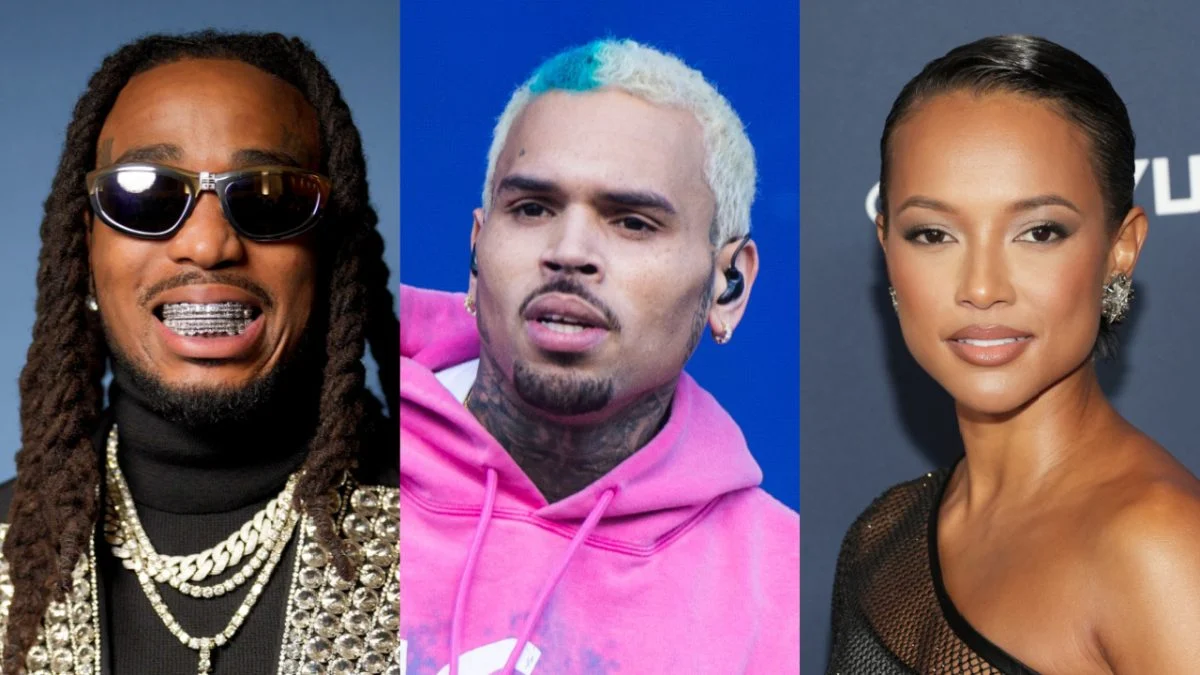
Hip-hop is no stranger to drama and beefs, often fueled by personal grievances, artistic rivalries, and the occasional social media spat. In the latest chapter of this ongoing saga, Migos rapper Quavo has found himself embroiled in a heated exchange with R&B sensation Chris Brown, sparking a conversation about accountability, respect, and the boundaries of artistic expression.
The catalyst for this feud? A diss track. Chris Brown, known for his smooth vocals and catchy hooks, took aim at Quavo in his new “11:11” deluxe album, unleashing a barrage of verbal shots over allegations of Quavo’s involvement with Brown’s ex-girlfriend, Karrueche Tran. Brown’s lyrics didn’t hold back, delivering a scathing rebuke that left little to the imagination.
“F***ing my old bitches ain’t gone make us equal/Sipping that 1942 cause I don’t do no Cuervo [Quavo]/Freak bitch she like Casamigos, not the Migos.”
The lyrics were a direct attack on Quavo’s character and his rumored relationship with Karrueche, igniting a firestorm of controversy and setting the stage for a retaliatory response. And Quavo did not disappoint. In his own track titled “Tender,” he fired back at Chris Brown, but with a twist.
Rather than engaging in a typical exchange of insults, Quavo took a different approach, opting to address Brown’s history of domestic violence. His lyrics were a pointed critique of Brown’s past behavior, suggesting that his mistreatment of women was to blame for Karrueche’s departure.
“You did the bitch wrong and now the bitch gone, she posted with a thug. Call the bitch phone, she won’t come home, don’t beat her up/It must be the drugs, need to cross out your plug.”
Quavo’s response sparked a flurry of reactions from fans and observers, with some applauding him for calling out Brown’s problematic behavior, while others criticized him for stooping to personal attacks. The feud between the two artists underscored the complexities of hip-hop beef and raised important questions about accountability, respect, and the limits of artistic expression.
At its core, the Quavo-Chris Brown feud serves as a reminder of the power—and responsibility—of artists to use their platforms wisely. While hip-hop has long provided a space for artists to express their thoughts, feelings, and experiences, it also carries a weighty obligation to do so in a manner that respects the dignity and humanity of others.
As the dust settles on this latest chapter in hip-hop’s ongoing saga, one thing is clear: the Quavo-Chris Brown feud has reignited conversations about accountability, respect, and the role of artists in shaping culture and society. In an industry where egos clash and tempers flare, it is crucial for artists to remember that their words have consequences, and that true greatness lies not in tearing others down, but in lifting each other up.
Leave a Reply