
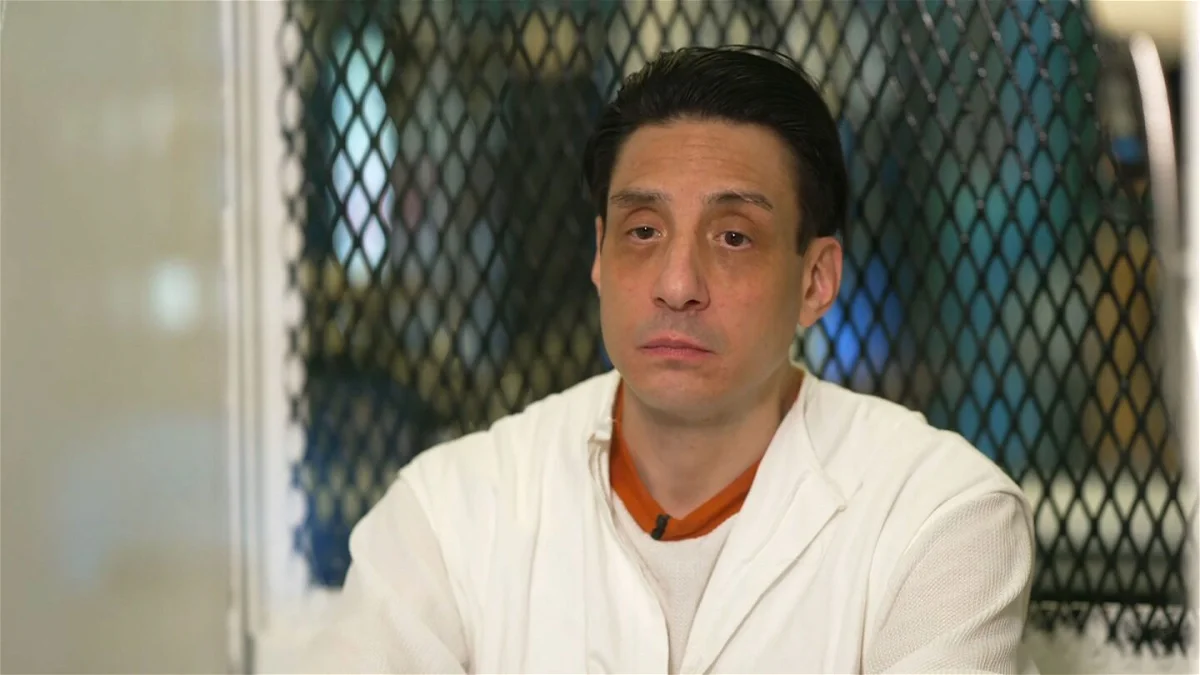
In the annals of criminal justice, certain cases stand out for their complexity, controversy, and lingering questions. The story of Ivan Abner Cantu, an American man from Dallas, Texas, convicted of double murder in North Dallas on November 4, 2000, is one such tale that continues to evoke curiosity and scrutiny.
Advertisement
Ivan Cantu, aged 50 at the time, found himself at the center of a legal maelstrom that would ultimately lead to his execution by lethal injection. The Collin County jury delivered a guilty verdict on October 16, 2001, based on evidence that Cantu’s supporters would later vehemently deem questionable.

The crimes in question were the murders of James Mosqueda, Cantu’s cousin, and Amy Kitchen, a promising nursing student. The haunting events transpired on that fateful day in 2000, casting a dark shadow over Cantu’s life. The subsequent legal proceedings, however, have left many wondering about the veracity of the evidence presented and the fairness of the trial.
On November 4, 2000, the lives of James Mosqueda and Amy Kitchen were tragically cut short. The aftermath saw Ivan Cantu facing the justice system, and the subsequent trial would lead to his conviction. The Collin County jury, after careful consideration of the evidence, declared Cantu guilty, setting in motion a chain of events that would culminate in his execution.
Advertisement
Cantu’s execution, carried out by lethal injection, was documented by the Texas Department of Criminal Justice, with the time of death recorded as 6:47 p.m. However, what makes this case particularly intriguing is Cantu’s unwavering proclamation of innocence until his last breath. In his final words, he maintained that he was wrongly accused and had no involvement in the murders of his cousin and Amy Kitchen.
The controversy surrounding Cantu’s case has sparked debates on the reliability of the evidence presented during the trial. Questions have been raised about the thoroughness of the investigation, the credibility of key witnesses, and the overall fairness of the legal proceedings. Cantu’s supporters argue that crucial aspects of the case were overlooked or inadequately examined, potentially leading to a miscarriage of justice.
As we reflect on the case of Ivan Cantu, it is imperative to consider the broader implications it holds for our justice system. Instances where doubt persists regarding the accuracy of a conviction underscore the need for a meticulous and impartial approach to investigations and trials. The pursuit of truth must always take precedence, even in the face of seemingly conclusive evidence.
The story of Ivan Cantu serves as a poignant reminder of the complexities inherent in our legal system and the potential consequences of a flawed process. As debates continue and questions linger, the case beckons for a thorough reexamination, urging us to strive for a justice system that is not only effective but unwaveringly just.
Leave a Reply