

The bubonic plague is an infection of the lymphatic system, usually resulting from the bite of an infected flea, Xenopsylla cheopis (the Oriental rat flea). Several flea species carried the bubonic plague, such as Pulex irritans (the human flea), Xenopsylla cheopis, and Ceratophyllus fasciatus.
Advertisement
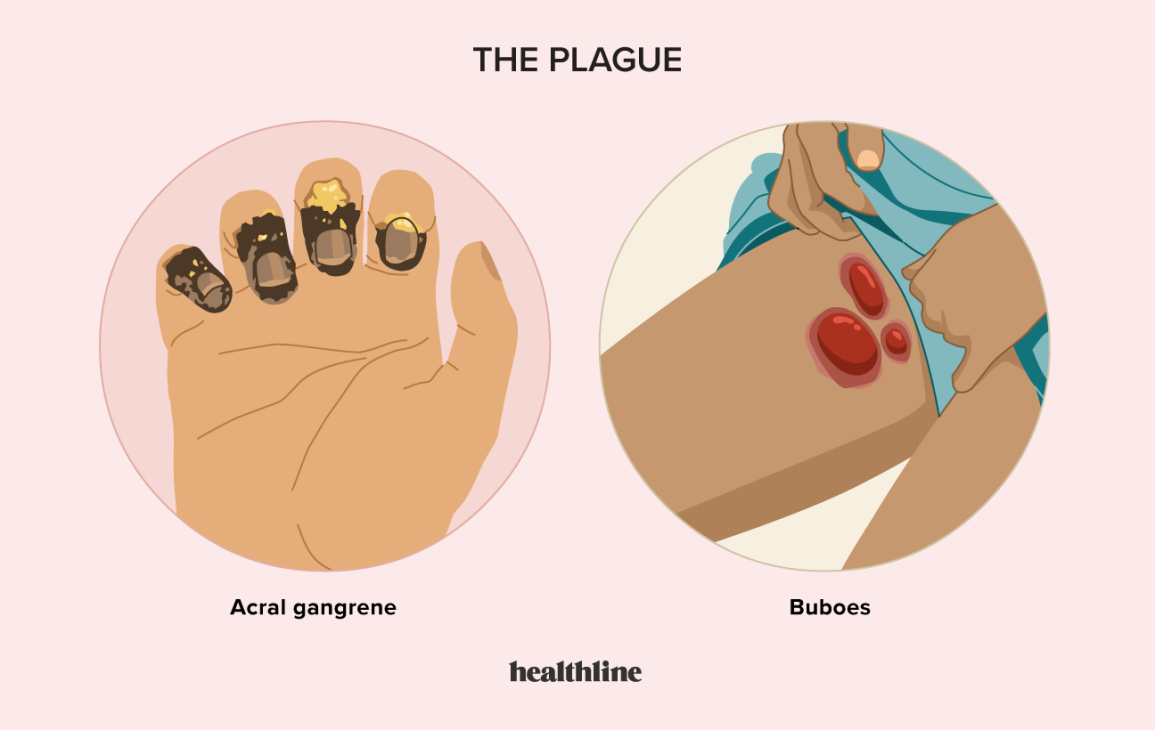
Bubonic plague History
Plague pandemics hit the world in three waves from the 1300s to the 1900s and killed millions of people. The first wave, called the Black Death in Europe, was from 1347 to 1351. The second wave in the 1500s saw the emergence of a new virulent strain of the disease.
Advertisement
Symptoms
The symptoms include sudden onset of fever, nausea, weakness, chills, muscle aches, and visibly swollen lymph nodes. If not diagnosed early, bubonic plague can lead to a bloodstream infection and a lung infection, health officials warned, which are difficult to treat and sometimes can lead to death.
Treatments
If you are diagnosed with bubonic plague, you’ll be hospitalized and given antibiotics. In some cases, you may be put into an isolation unit. Antibiotics that treat bubonic plague include Ciprofloxacin, levofloxacin, and moxifloxacin.
Death Toll
Black Death, was a pandemic that ravaged Europe between 1347 and 1351.
Today
The bottom line is that while the plague does still exist today, as long as a patient is treated accordingly, they can be cured. The bubonic plague might have been a deadly disease in the mid-1300s, but today it is rare and hard to come by.
Leave a Reply