
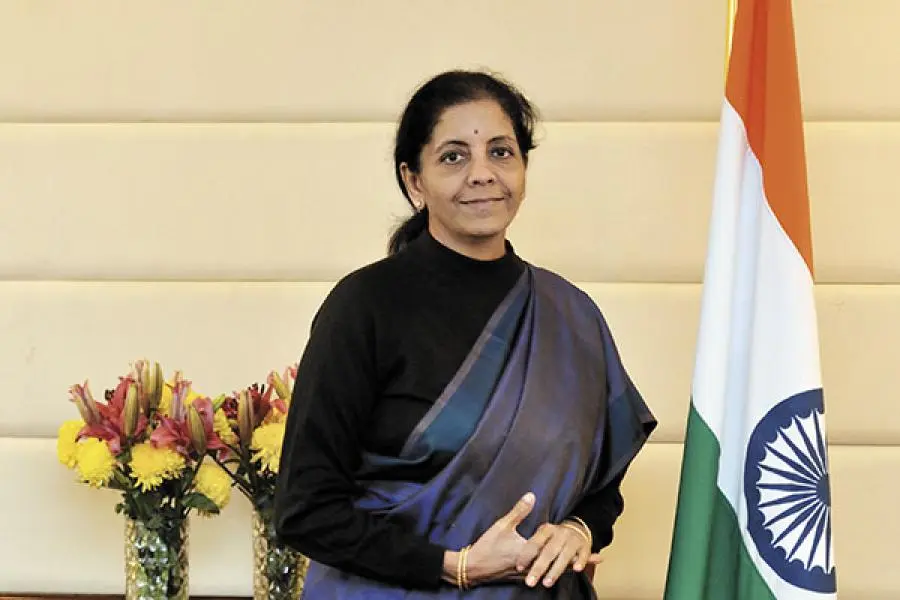
Nirmala Sitharaman: A Profile of India’s Finance Minister
Nirmala Sitharaman, the current Finance Minister of India, stands as a beacon of leadership and stewardship in the realm of economic governance.
Advertisement
From her humble beginnings to her pivotal role in shaping India’s fiscal policies, Sitharaman’s journey is one of dedication, intellect, and service to the nation.
Early Life and Education
Born on August 18, 1959, in Madurai, Tamil Nadu, Nirmala Sitharaman was raised in a family deeply rooted in Tamil culture and values.
Her father, Narayanan Sitharaman, served as a dedicated employee of the Indian Railways, while her mother, Savitri Sitharaman, nurtured her with love and wisdom.
Sitharaman pursued her education with diligence and determination.
After completing her schooling in Madras and Tiruchirapalli, she earned a Bachelor of Arts degree in economics from Seethalakshmi Ramaswami College, Tiruchirapalli.
Her quest for knowledge led her to Jawaharlal Nehru University in Delhi, where she obtained her Master of Arts and M.Phil degrees in economics.
Family and Personal Life

Nirmala Sitharaman is married to Parakala Prabhakar, an esteemed economist and commentator known for his insights into economic matters.
Advertisement
Their union is blessed with a daughter named Parakala Vangmayi, who embodies the essence of grace and promise.
Contribution to Fiscal Policy
As the Finance Minister of India, Nirmala Sitharaman has been at the forefront of shaping the nation’s economic landscape.
Her tenure has been marked by a steadfast commitment to fiscal prudence, growth-oriented policies, and inclusive development.
The Budget 2024
The interim budget for India in 2024, presented by Finance Minister Nirmala Sitharaman, underscores the government’s unwavering focus on capital expenditure and infrastructure development.
With an allocation of over 11.1 trillion rupees ($133.9 billion) to capital expenditure, the budget reflects a strategic investment in the nation’s future.
Furthermore, the budget outlines a fiscal deficit target of 5.1% for the financial year 2025, signaling a concerted effort to achieve fiscal discipline and sustainability.
The interim budget is slated to take effect from April 1, 2024, until a new government presents a comprehensive budget that aligns with the nation’s evolving priorities.
Leave a Reply