
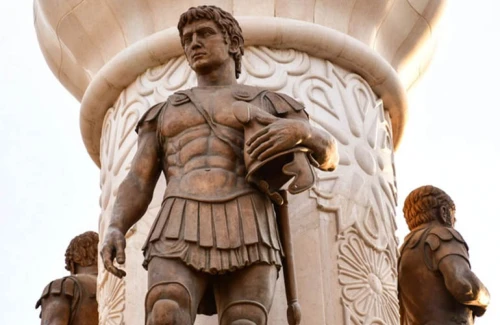
Estimating the wealth of historical figures, especially those from ancient times like Alexander the Great, is a challenging task due to the lack of precise financial records and the differences in economic systems.
Advertisement
However, historical accounts suggest that Alexander the Great, as the ruler of a vast empire, had access to immense wealth.
During his conquests, Alexander accumulated substantial treasures from the Persian Empire, which was known for its opulence.
The Persian royal treasuries, including those of Darius III, were vast, and Alexander seized considerable riches after defeating Darius in battles such as Issus and Gaugamela. These treasures included gold, silver, precious gems, and other valuable artifacts.
Advertisement

The wealth of Alexander was not only in material possessions but also in the control of the resources of the vast territories he conquered. The Persian Empire was one of the wealthiest empires of its time, encompassing prosperous regions with abundant agricultural, industrial, and trade resources.
Alexander’s wealth was not just a result of conquests; he also implemented administrative and economic policies to ensure the prosperity of his empire. His vision of Hellenization aimed at integrating Persian and Greek cultures, fostering economic exchanges, and facilitating trade across the vast territories under his rule.
While it is challenging to quantify Alexander the Great’s wealth in contemporary terms, it is safe to say that he wielded significant economic power during his reign. His control over the vast resources of the Persian Empire and the treasures he amassed through conquests contributed to his influence and the grandeur of his empire.
Leave a Reply