
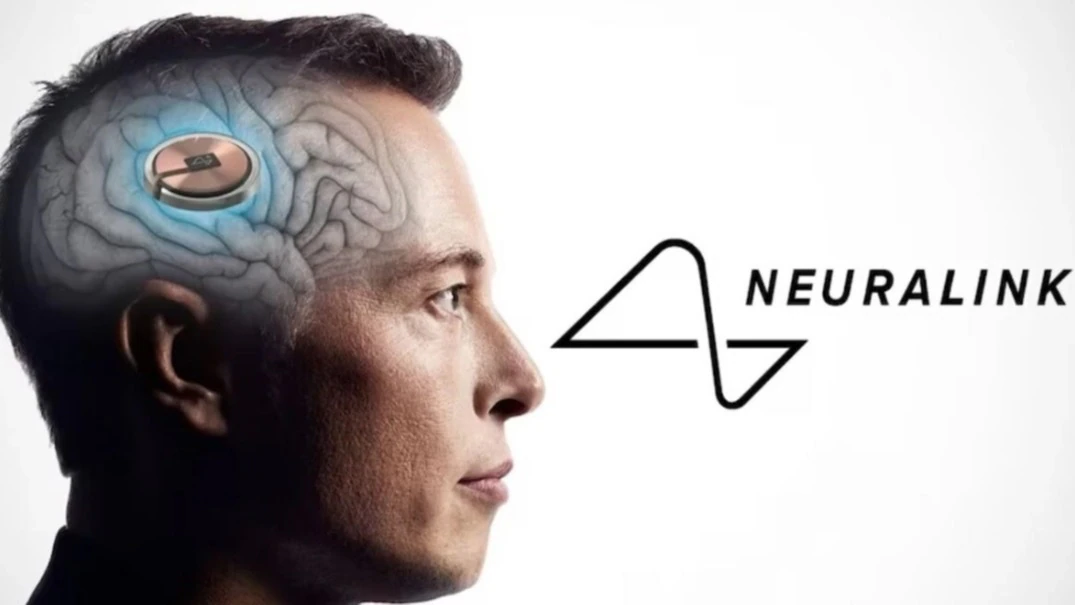
Neuralink is a brain-computer interface company founded by Elon Musk, the billionaire entrepreneur and visionary behind SpaceX and Tesla. Neuralink’s goal is to create a wireless implantable device that can connect the human brain to computers and other devices, enabling people to control them with their thoughts.
Advertisement
Neuralink recently announced that it has implanted its first brain chip in a human patient, a milestone achievement for the company and the field of brain-computer interfaces. The patient, who has not been identified, is recovering well and showing promising signs of neuron spike detection, according to Musk.
The implant was performed by a surgical robot developed by Neuralink, which can insert ultra-fine threads into the brain without damaging blood vessels. The patient is part of Neuralink’s Prime study, a clinical trial that aims to evaluate the safety and functionality of the implant in people with quadriplegia, or paralysis of all four limbs.

The study will also assess how the implant can enable them to control devices such as computers, smartphones, wheelchairs, and prosthetics with their thoughts. Neuralink is not the first company to develop brain-computer interfaces, nor the first to implant them in humans.
For decades, researchers and companies have been exploring ways to connect the brain to external devices for various purposes, such as restoring movement, sensation, communication, and cognition in people with disabilities or diseases. Some of these devices stimulate the brain with electrical currents to modulate its activity, while others record the brain’s signals to decode its intentions.
Advertisement
However, Neuralink claims to have some advantages over existing technologies, such as higher bandwidth, wireless connectivity, biocompatibility, and scalability. Neuralink’s device consists of a coin-sized chip that contains more than a thousand electrodes, each connected to a thread thinner than a human hair.
The chip can record from up to 2,048 channels of neural activity, compared to hundreds in most current devices. The chip also communicates wirelessly with a wearable device that can stream data to a smartphone app or other devices.
Neuralink hopes that its device will eventually be able to treat a wide range of neurological conditions, such as Parkinson’s disease, Alzheimer’s disease, epilepsy, depression, and addiction. Musk has also envisioned more futuristic applications, such as enhancing human intelligence, memory, and creativity, or merging with artificial intelligence.
However, Neuralink still faces many challenges and uncertainties before achieving these ambitious goals. The device has only been tested in a few animals and one human, and its long-term safety and efficacy are unknown. The device also requires complex software and algorithms to interpret the brain’s signals and translate them into meaningful commands or feedback.
Moreover, the device may raise ethical, social and legal issues regarding privacy, security, consent and identity. Neuralink is one of the most exciting and controversial companies in the field of brain-computer interfaces.
It has the potential to revolutionize how we interact with technology and each other, but it also poses many risks and challenges that need to be carefully addressed. Neuralink is not a magic cure for all brain problems, nor a shortcut to superhuman abilities. It is a tool that can open new possibilities for human enhancement or restoration, but also new dilemmas for human society.
Leave a Reply