
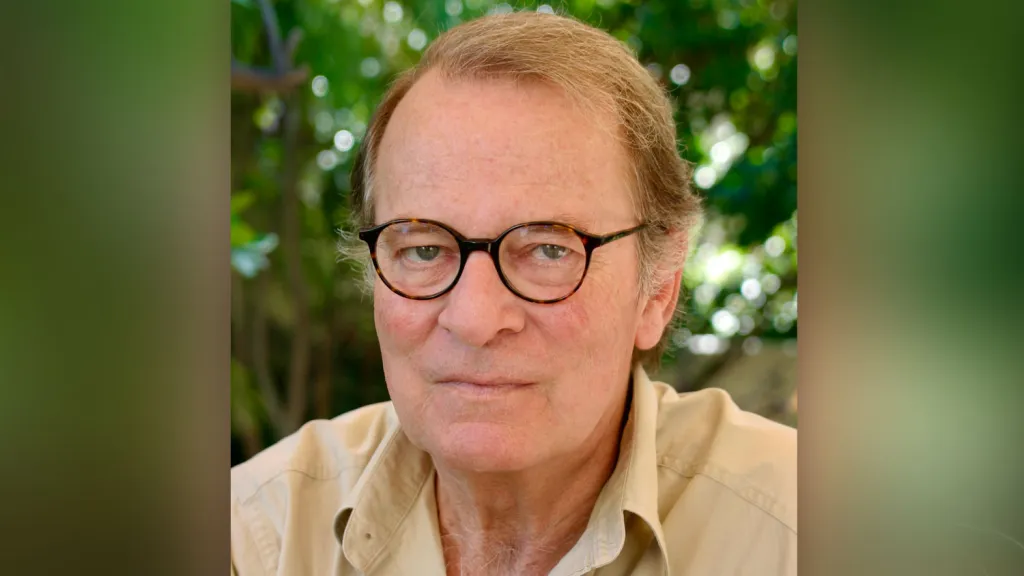
On October 12, 1910, Robert Stuart Fitzgerald was born, destined to become a prominent American poet, literary critic, and translator. His legacy, deeply intertwined with the classics, poetry, and academia, continues to resonate with scholars and students alike.
Advertisement
Fitzgerald’s early life unfolded in Springfield, Illinois, where he spent his formative years. Graduating from The Choate School (now Choate Rosemary Hall) in Wallingford, Connecticut, marked the beginning of his academic journey. In 1929, Fitzgerald embarked on his Harvard education, and by 1931, his poems found a place in the revered Poetry magazine. This early recognition hinted at the literary promise that would later define his career.

Upon graduating from Harvard in 1933, Fitzgerald took on the role of a reporter for the New York Herald Tribune. However, his journey took a different turn as he ventured into the realm of Time magazine, where he worked for several years. Notably, in 1940, he was acknowledged as an “associate editor” by William Saroyan in the play “Love’s Old Sweet Song,” and his name surfaces in Whittaker Chambers’ memoir, “Witness,” in 1952.
World War II called, and Fitzgerald dutifully served in the U.S. Navy in Guam and Pearl Harbor. Post-war, he transitioned into academia, serving as an instructor at Sarah Lawrence and Princeton University. His role as poetry editor at The New Republic showcased his literary acumen, paving the way for his appointment as Boylston Professor of Rhetoric and Oratory at Harvard in 1965. Fitzgerald held this position until his retirement in 1981, leaving an indelible mark on the academic landscape.
Advertisement
Beyond his scholarly achievements, Fitzgerald’s impact extended to the realm of poetry. His poetic translations of ancient Greek and Latin classics earned him recognition as one of the most esteemed translators into the English language. This proficiency also led to his appointment as the literary executor to acclaimed writer Flannery O’Connor.
Fitzgerald’s personal life unfolded through three marriages. His second wife, Sally Fitzgerald, played a crucial role in compiling O’Connor’s essays and letters following the writer’s passing. The Fitzgerald family extended to include sons Benedict, Barnaby, and Michael.
In recognition of his contributions, Fitzgerald became a member of the American Academy of Arts and Sciences and a Chancellor of the Academy of American Poets. The years 1984 to 1985 saw him appointed as the Consultant in Poetry to the Library of Congress, though illness prevented him from serving.
His literary journey and dedication to the craft were acknowledged in 1984 when Bates College conferred upon him an honorary degree (L.H.D.). The accolade stood as a testament to Fitzgerald’s enduring impact on literature.
In his later years, Fitzgerald called Hamden, Connecticut, home. On January 16, 1985, he peacefully passed away at his residence, leaving behind a legacy woven with the threads of translation, poetry, and a profound commitment to the literary arts. Today, the resonance of Robert Stuart Fitzgerald’s contributions continues to echo through the corridors of academia and the pages of timeless literature.
Leave a Reply