
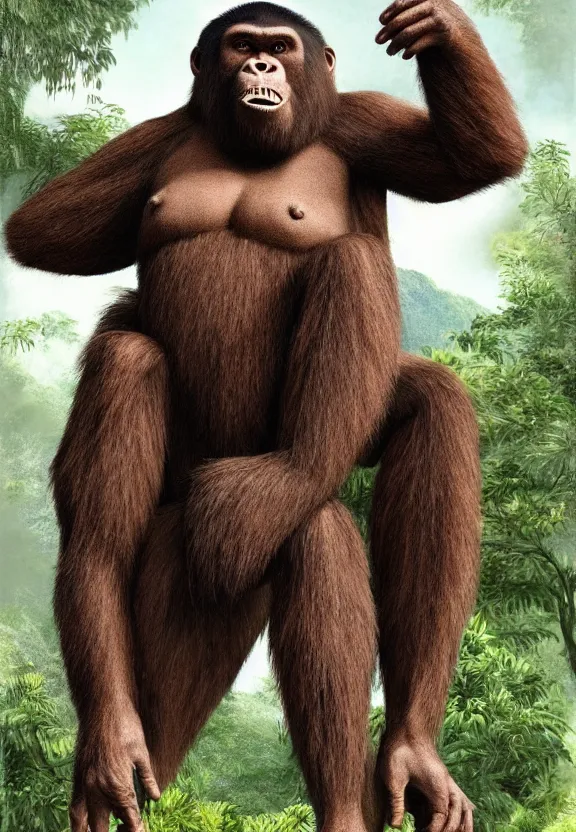
Millions of years ago, the colossal Gigantopithecus roamed Southeast Asia, a giant ape with a modest impact on its ecosystem.
Advertisement
While its existence was marked by a simple pursuit of fruit and bamboo, the fossils left behind by Gigantopithecus have become treasures for scientific exploration.
These remnants offer vital insights into primate evolution, shedding light on the ancestral path that eventually led to the emergence of humans.
By scrutinizing the intricate details of their teeth and jaws, researchers unravel the mysteries of Gigantopithecus’ dietary preferences and feeding strategies.
Advertisement

Photo via Reddit
Simultaneously, the study of their bones provides a deeper understanding of their locomotion patterns and impressive body size.
How long did Gigantopithecus live?
The Gigantopithecus lived for 1.7 million years. Towering over contemporary gorillas, these giants faced extinction around 350,000 years ago.
The mystery of their extinction lingers, with climate shifts and diminishing resources as potential culprits. The very size that once secured their dominance may have turned against them in a world of scarcity.
Leave a Reply