
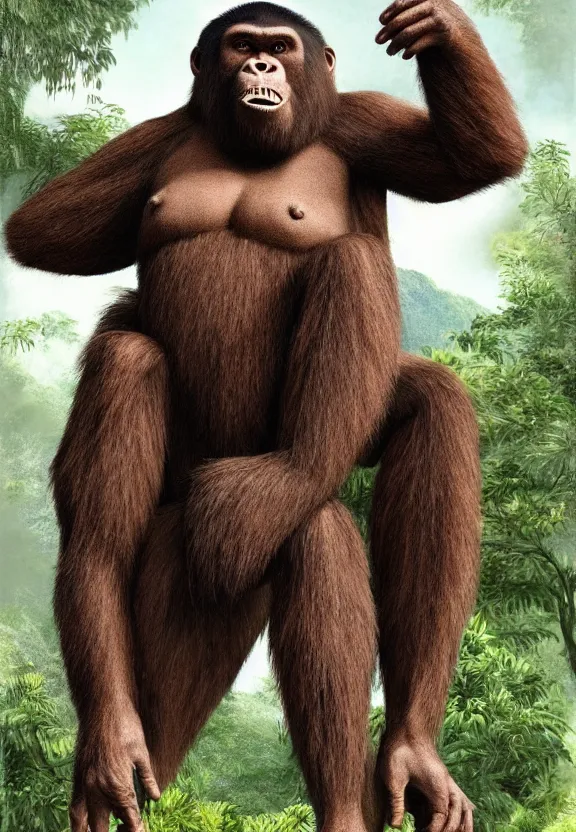
In 1935, paleontologist Ralph von Koenigswald stumbled upon the enigma of Gigantopithecus in a Chinese drugstore.
Advertisement
His chance encounter with massive teeth, falsely labeled as “dragon bones,” ignited a quest to unravel the mysteries of an extraordinary primate.
Recognizing these teeth as surpassing any known ape in size, von Koenigswald’s curiosity led him to explore further. Subsequent discoveries of additional teeth and jawbones solidified the existence of Gigantopithecus blacki, a colossal ape that once roamed the ancient world.
Von Koenigswald’s dedication and perseverance played a pivotal role in unearthing this long-extinct giant, shedding light on a fascinating chapter in the evolutionary history of primates.
Gigantopithecus’ story, born from a chance discovery in a Chinese drugstore, stands as a testament to the relentless pursuit of knowledge in the realm of paleontology.
Advertisement

Photo via Reddit
Is King Kong a Gigantopithecus?
King Kong, the iconic cinematic giant ape, may evoke thoughts of Gigantopithecus, the ancient colossal primate, but they are distinct entities.
Gigantopithecus, a genuine prehistoric giant ape, holds the title of the largest primate to have roamed the Earth millions of years ago. The parallels lie in their imposing size and ape-like characteristics, sparking understandable comparisons.
King Kong transcends reality as a fictional creation, surpassing Gigantopithecus in size, strength, and agility. While Gigantopithecus shares genetic ties with orangutans, King Kong is often depicted as more akin to gorillas or even an entirely unique species.
Leave a Reply