
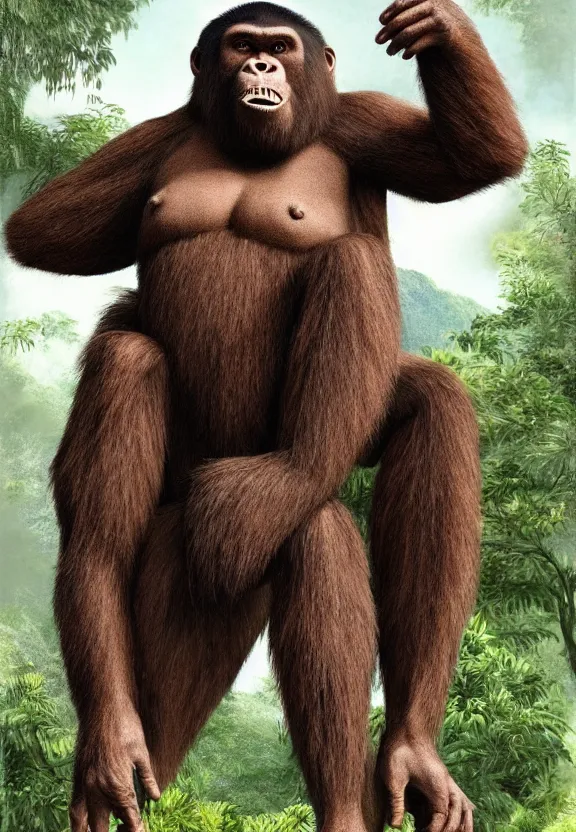
Gigantopithecus, the colossal ape that once roamed Southeast Asia, faced a dual threat that led to its extinction around 300,000 years ago.
Advertisement
As climate change transformed their lush forest habitats into unforgiving savannas approximately 700,000 years ago, Gigantopithecus struggled to adapt.
The monumental shift brought harsher seasons, affecting the availability of their specialized diet, heavily reliant on specific fruits and plants.
The gentle giants, with their immense size, found it challenging to sustain themselves as suitable food sources diminished.
While some theories propose competition with early humans as a contributing factor, a closer examination reveals that climate change and dietary inflexibility played pivotal roles.
Advertisement

Photo via Reddit
The relentless pressure of evolving conditions proved insurmountable for Gigantopithecus, leading to a gradual decline and eventual disappearance.
What if Gigantopithecus didn’t go extinct?
If Gigantopithecus didn’t go extinct, their colossal presence would reverberate, affecting fellow primates like orangutans in the struggle for food and territory.
Despite relying on a herbivorous diet centered around fruits and bamboo, these giants would confront challenges from climate change and human-driven agriculture expansion. However, their towering stature could grant them a strategic advantage, reaching sustenance beyond the grasp of other species.
While debates persist about their intelligence, their distinctive social structures hold the potential to unravel mysteries in primate evolution.
Leave a Reply