
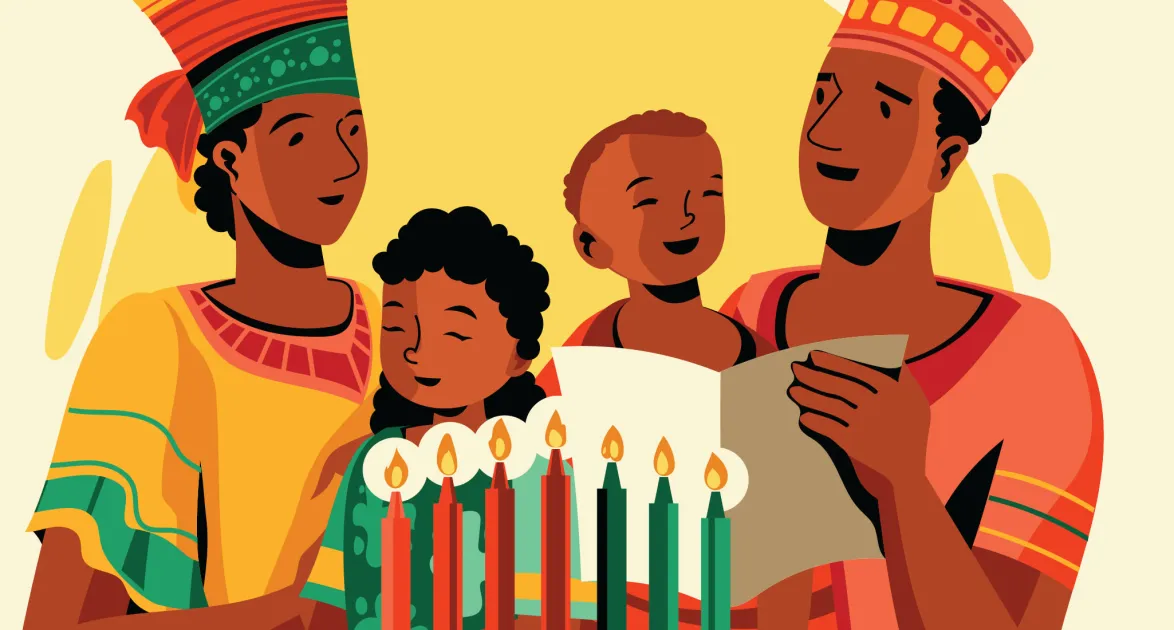
Kwanzaa is not a black Christmas. It is not a religious holiday, nor is it meant to replace Christmas. It is a cultural celebration based on African harvest festival traditions.
Advertisement
Kwanzaa is not political. It was created in 1966 by activist Maulana Karenga, who wanted to affirm African family and social values. The name Kwanzaa comes from the Swahili phrase matunda ya kwanza, meaning “first fruits”.

Kwanzaa lasts for seven days, from December 26 to January 1, and each day is dedicated to one of the seven principles of Kwanzaa: unity, self-determination, collective responsibility, cooperative economics, purpose, creativity, and faith.
Advertisement
Kwanzaa has seven symbols: fruits, vegetables, and nuts; a straw mat; a candleholder; ears of corn; gifts; a communal cup; and seven candles in red, green, and black. Each symbol represents an aspect of African culture or history.
Kwanzaa is celebrated by lighting one candle each day in the candleholder, called a kinara, and discussing the principle of the day. On December 31, there is a community feast called a karamu .
Kwanzaa is a way to celebrate African heritage and legacy and to honor the ancestors. It is also a time to reflect on the past year and to plan for the future.
Leave a Reply