
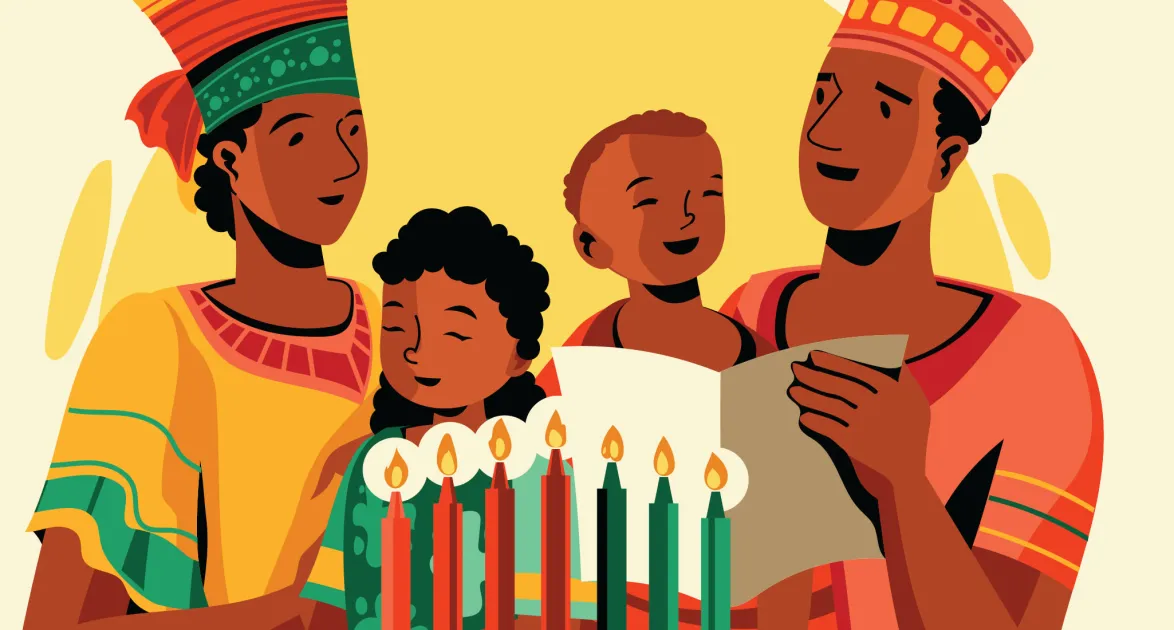
The name Kwanzaa comes from the Swahili phrase matunda ya kwanza, meaning “first fruits”. Kwanzaa does not have a tree, but it does have seven symbols that are used to celebrate the holiday.
Advertisement
These are fruits, vegetables, and nuts; a straw mat; a candleholder; ears of corn; gifts; a communal cup; and seven candles in the African colors of red, green, and black.

The candles represent the seven principles of Kwanzaa: unity, self-determination, collective responsibility, cooperative economics, purpose, creativity, and faith. Each day, one of the candles is lit and the principle for the day is discussed.
Advertisement
Kwanzaa is not a pagan holiday, but rather a cultural and secular one that draws on Southern African first-fruits celebrations. It is not meant to replace any religious observance, but rather to complement it. Kwanzaa is open to people of all faiths and backgrounds who want to honor the African heritage and culture.
On December 31, there is a community feast called the karamu, where participants may wear traditional African clothing and share food, music, and stories.
Leave a Reply