
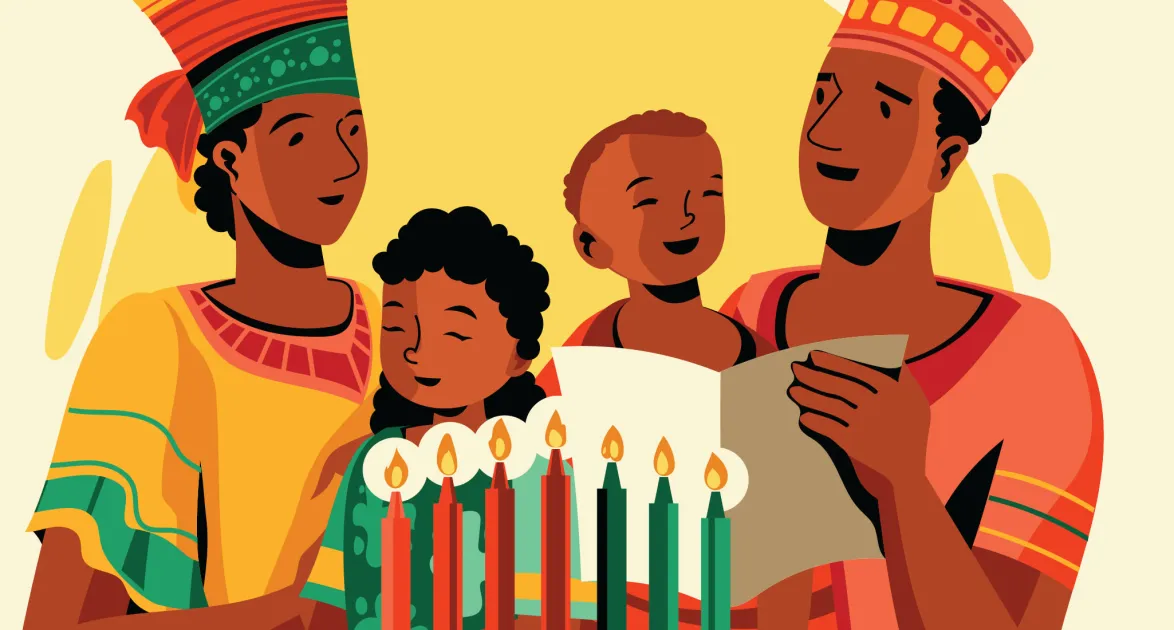
If you are looking for a way to celebrate African-American culture and heritage, you might want to learn more about Kwanzaa, a week-long holiday that takes place from December 26 to January 1 every year.
Advertisement
Kwanzaa is a unique holiday that celebrates African-American culture and heritage. It is a time to reflect on the past, present, and future of African people. It is also a time to strengthen bonds among family members and friends.

Kwanzaa Candle holder
The candleholder (Kinara) represents the roots of African people in the continent of Africa.
Kwanzaa Meaning
Kwanzaa is not a religious holiday, but a cultural one that aims to affirm African family and social values. It is celebrated by millions of people in the United States and around the world, especially in the Caribbean and other countries with large African diaspora populations.
Kwanzaa is not meant to replace Christmas or any other religious celebration but to complement them with a focus on African-American identity and community.

Kwanzaa 2023
In 2023, Kwanzaa will start on Tuesday, December 26, and end on Monday, January 1. During this time, families and communities will celebrate their culture and history with songs, dances, stories, poetry, and a feast on the last day.
They will also decorate their homes with African art, fabrics, and other symbols of Kwanzaa. Some of these symbols are the mkeka (mat), the mazao (crops), the kikombe cha umoja (unity cup), the zawadi (gifts) and the bendera (flag).
Kwanzaa Symbols
One of the main features of Kwanzaa is the seven principles, or Nguzo Saba, that guide the celebration. Each day of Kwanzaa is dedicated to one of these principles, which are:
Advertisement
- Unity (Umoja): To strive for and maintain unity in the family, community, nation, and race.
- Self-determination (Kujichagulia): To define ourselves, name ourselves, create for ourselves, and speak for ourselves.
- Collective work and responsibility (Ujima): To build and maintain our community together and make our brothers’ and sisters’ problems our problems and solve them together.
- Cooperative economics (Ujamaa): To build and maintain our own stores, shops, and other businesses and to profit from them together.
- Purpose (Nia): To make our collective vocation the building and developing of our community in order to restore our people to their traditional greatness.
- Creativity (Kuumba): To always do as much as we can, in the way we can, in order to leave our community more beautiful and beneficial than we inherited it.
- Faith (Imani): To believe with all our hearts in our people, our parents, our teachers, our leaders, and the righteousness and victory of our struggle.
Kwanzaa Decorations
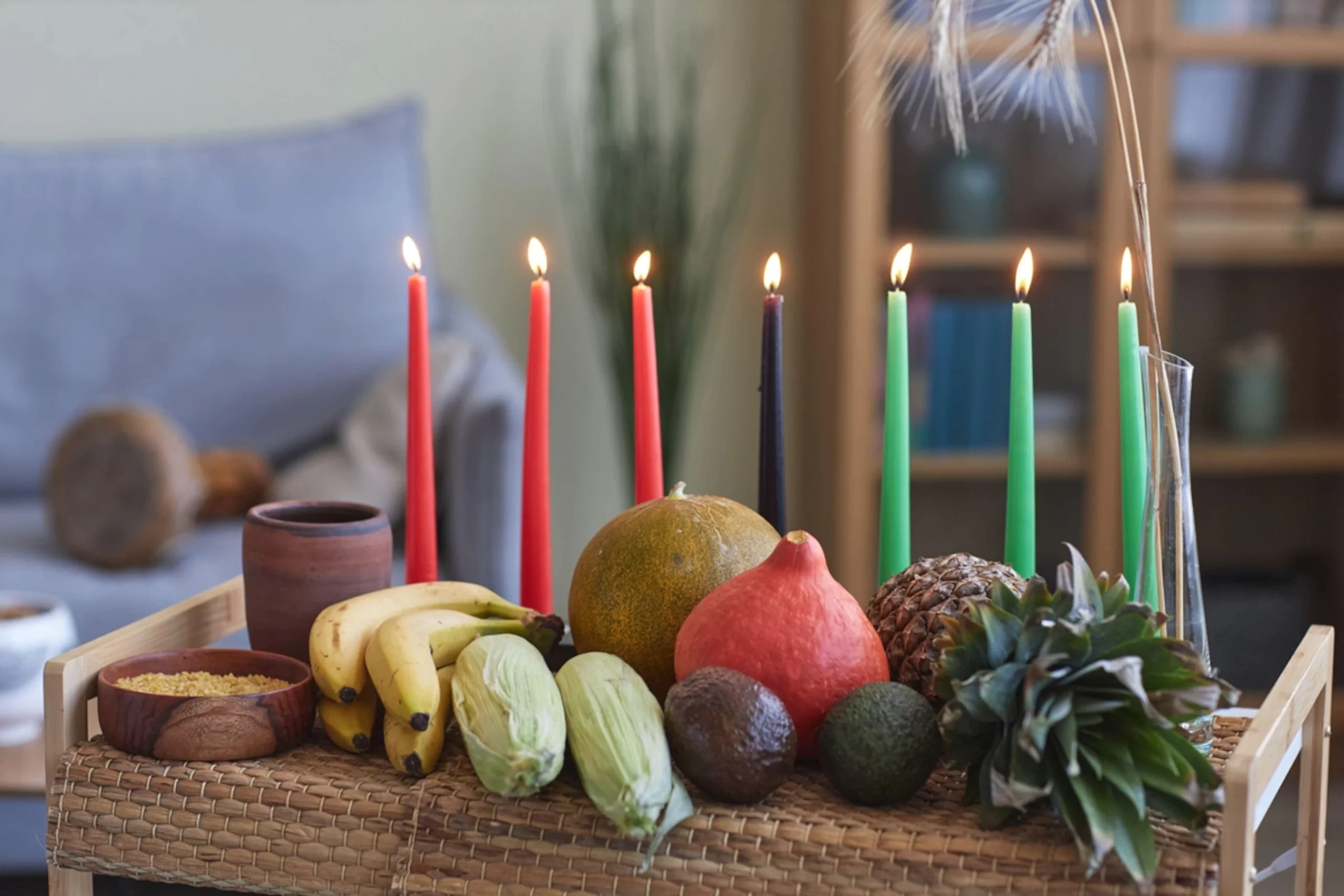
- Display a kinara, a candle holder with seven candles in red, black, and green, representing the colors of the Pan-African flag. Light one candle each day, starting from the black one in the center, and say the name of the principle of the day. You can buy a kinara online or make your own with wood or clay.
- Hang a Kwanzaa banner or garland on your wall, door, or fireplace. You can use felt balls, paper, or fabric in red, black, and green to make your own garland. You can also print out some Kwanzaa posters with the principles or symbols of the holiday.
- Use a table runner or a cloth in red, black, and green to cover your table. You can also add some African patterns or prints to make it more festive. On your table, place a mkeka, a straw mat that represents the foundation of African culture. On top of the mkeka, place some items that symbolize the harvest, such as fruits, vegetables, nuts, and corn.
- Decorate your Christmas tree with some Kwanzaa ornaments, such as wooden carvings, African masks, beads, or dolls. You can also use some red, black, and green ribbons or lights to match the theme.
- Throw a colorful blanket or tapestry on your sofa or bed. You can choose one with some African motifs or images of dancing women. You can also add some pillows or cushions with Kwanzaa messages or symbols.
Kwanzaa Origin
Kwanzaa was created in 1966 by Maulana Karenga, a professor of Africana studies and an activist, based on African harvest festival traditions. The name Kwanzaa comes from the Swahili phrase matunda ya kwanza, meaning “first fruits”.
Leave a Reply