

Murillo painted Christ, the Virgin, and Saint John the Baptist as beautiful children to inspire empathy and charity. Above all, Murillo is remembered for his religious paintings, particularly his renditions of the Immaculate Conception, a cornerstone of Catholic doctrine that obsessed many Spanish Baroque painters.
Advertisement

National Gallery
Bartolome Esteban Murillo, a prominent Baroque painter of 17th-century Spain, left an indelible mark on the art world with his captivating religious paintings. Among his notable works, his renditions of Jesus, the Virgin Mary, and Saint John the Baptist as beautiful children stand out, reflecting a deliberate choice to inspire empathy and charity. One such masterpiece is “Holy Family with a Little Bird” (1650), where Joseph cradles Christ, holding a goldfinch. This article explores Murillo’s artistic choices and delves into the deeper meaning behind the holy family with a little bird.

Brooklyn Museum
The Passionate Artistry of Murillo: Murillo, born in Seville in December 1617, lived his entire life in the city, becoming its leading painter in the later 17th century. Despite facing personal hardships, and being orphaned before his tenth birthday, Murillo’s art flourished. His earlier training in the workshop of Juan del Castillo paved the way for a successful career marked by religious commissions. In 1645, Murillo received his first known commission, setting the stage for a prolific career deeply intertwined with the religious institutions of Seville.
Advertisement

Britannica
Inspiring Empathy and Charity: Murillo’s decision to portray Christ, the Virgin, and Saint John as children was a deliberate artistic choice to evoke empathy and, by extension, charity. The innocence and vulnerability of the divine figures served to create a connection between the viewers and the sacred subjects, fostering a sense of compassion and love. This approach resonated strongly with the religious sentiments of the time and contributed to Murillo’s enduring popularity across Europe in the 18th and early 19th centuries.
The Symbolism of “Holy Family with a Little Bird”: In the painting “Holy Family with a Little Bird,” Joseph cradles the Christ Child, who holds a goldfinch. The goldfinch, known for eating thorns, symbolizes Christ’s Passion, specifically the Crown of Thorns. This symbolic representation adds meaning to the artwork, inviting viewers to contemplate the profound sacrifice embedded in Christian doctrine. Murillo’s meticulous attention to detail and symbolic richness make this painting a masterpiece that transcends its aesthetic beauty.

Museo del Prado
Jesus in Art: A Symbolic Journey Through Time: The representation of Jesus in art has evolved over the centuries, from iconic works like Leonardo da Vinci’s “The Last Supper” to contemporary renditions by young artists like Akiane. Murillo’s choice to depict Jesus as a child highlights a unique facet of the divine narrative, inviting viewers to connect with the humanity of Christ.

Bartolome Esteban Murillo’s artistic legacy is deeply rooted in his ability to capture the spiritual essence of his subjects. Through his religious paintings, particularly those portraying Jesus and the Holy Family, Murillo aimed to inspire empathy, charity, and contemplation.
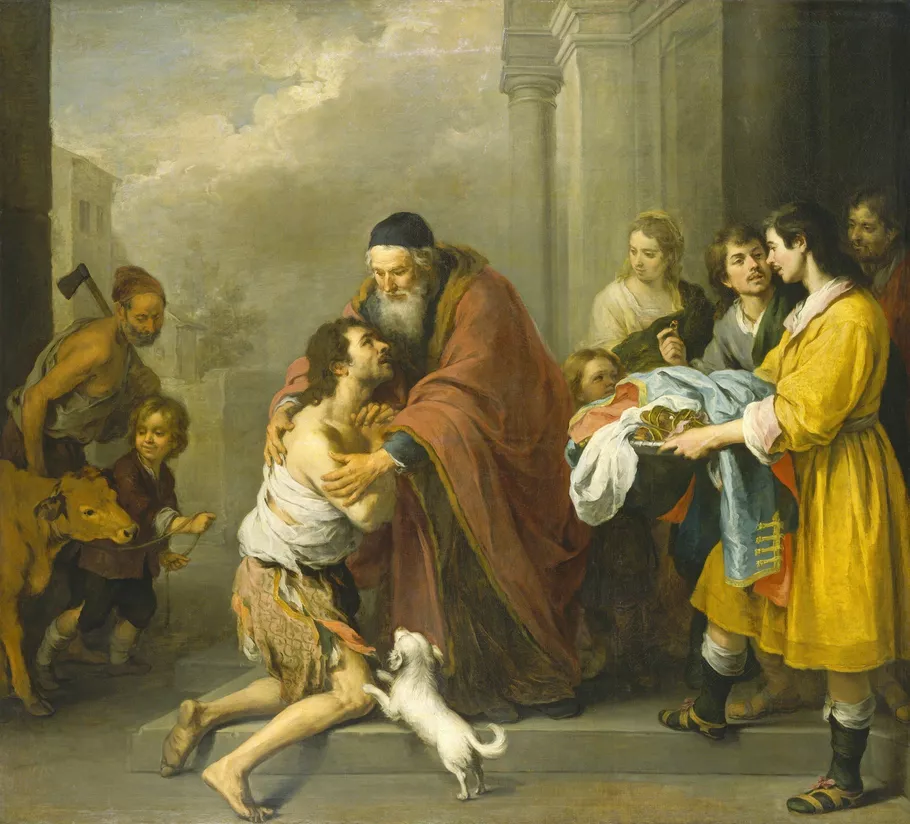
The symbolism embedded in “Holy Family with a Little Bird” speaks volumes about the artist’s mastery and his profound understanding of religious themes. As we continue to appreciate Murillo’s contributions to art, we are reminded of the enduring power of visual storytelling in conveying the divine.
Leave a Reply