

Fidel Alejandro Castro Ruz, the iconic Cuban revolutionary and political leader, rose to prominence as the driving force behind the Cuban Revolution, a movement that ultimately led to the overthrow of the government of Fulgencio Batista. In this article, we delve into the historical context surrounding Fidel Castro’s ascent to power and the figure he replaced – Fulgencio Batista.
Advertisement
The Setting: Cuba’s Political Landscape
To understand the rise of Fidel Castro, we must first explore the political climate of Cuba during the mid-20th century. The Cuban Revolution emerged in response to decades of political instability, corruption, and foreign intervention, particularly the influence of the United States.
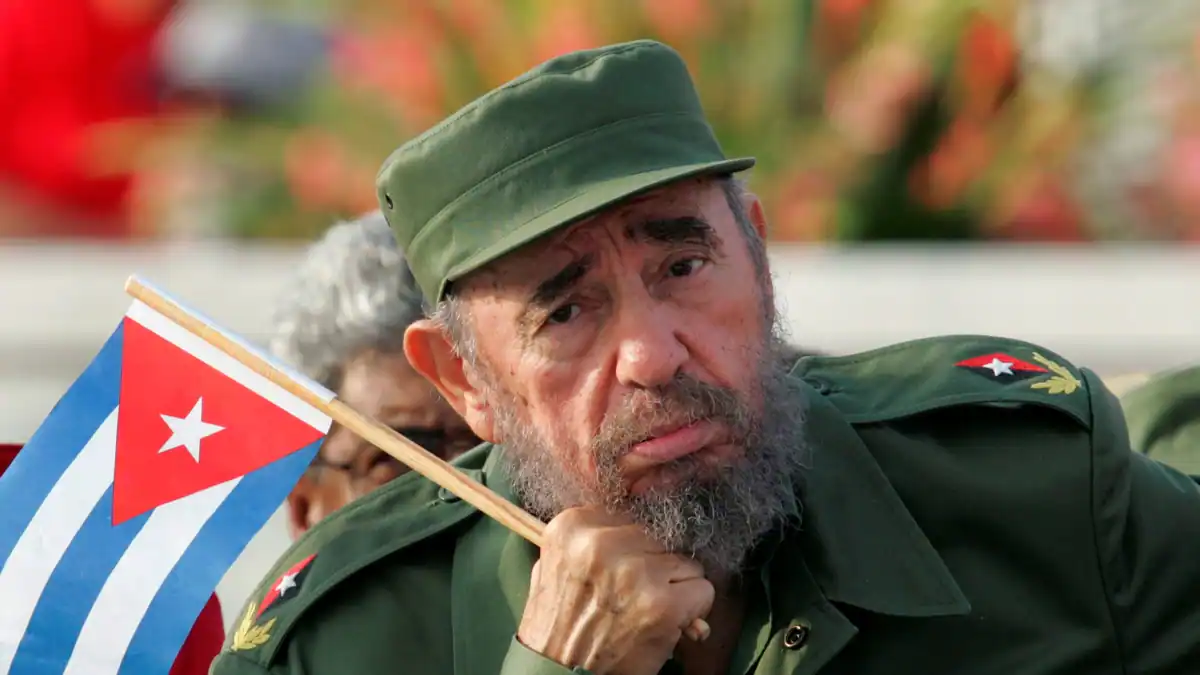
Fulgencio Batista’s Rule
Fulgencio Batista, a military officer, first came to power in Cuba through a coup in 1940. Despite a brief period of elected civilian government, Batista returned to power through another coup in 1952, suspending the constitution and establishing a military dictatorship. His rule was characterized by authoritarianism, political repression, and close ties to American interests.
Fidel Castro’s Entry and the Cuban Revolution
Fidel Castro, born on August 13, 1926, in Biran, Cuba, emerged as a charismatic and determined leader who opposed Batista’s regime. Returning to Cuba from exile, Castro played a pivotal role in the Cuban Revolution by leading a guerrilla war against Batista’s forces from the Sierra Maestra mountains.
Advertisement
The armed uprising gained widespread support among the Cuban population, drawing from discontent with Batista’s oppressive rule and unequal distribution of wealth. Fidel Castro’s leadership, combined with the revolutionary fervor of his supporters, culminated in the overthrow of Batista’s government on January 1, 1959.
Batista’s Departure and Castro’s Rise to Power
Following the success of the revolution, Fulgencio Batista fled Cuba, and Fidel Castro assumed both military and political power. With Batista’s departure, Castro became Cuba’s prime minister, marking the beginning of his long and influential political career. The revolution’s leader, Fidel Castro, would go on to rule Cuba from 1959 to 2008.
Historical Context: U.S. Influence and the Platt Amendment
Understanding the broader historical context is crucial in grasping the dynamics that led to Fidel Castro’s ascent. After the Spanish-American War, Cuba came under U.S. control, governed by direct U.S. military administration until May 20, 1902. The Platt Amendment, imposed by the U.S., placed certain conditions on Cuba, including restrictions on its ability to incur debts, the leasing of naval stations to the U.S., and the possibility of U.S. intervention to preserve Cuban independence.
Fidel Castro’s rise to power was a turning point in Cuban history, marked by the overthrow of Fulgencio Batista’s regime and the establishment of a revolutionary government. The complex interplay of political, economic, and historical factors set the stage for Fidel Castro’s leadership, shaping the destiny of Cuba for nearly five decades. As we reflect on this pivotal period, the legacies of both Castro and Batista continue to influence the narrative of Cuba’s political evolution.
Leave a Reply