
Unraveling the Heart of Peter Pan: Why Love Couldn’t Keep Him with Wendy
Advertisement
In the whimsical world of J. M. Barrie’s creation, the relationship between Peter Pan and Wendy Darling has stirred the imaginations of readers and audiences for over a century. The enigmatic boy who refuses to grow up and the nurturing girl who becomes the mother to his Lost Boys create a dynamic that goes beyond mere friendship. However, the question lingers: Did Peter Pan love Wendy, and if so, why did he choose not to stay with her in Neverland?
As a fictional character brought to life by the pen of Scottish novelist and playwright J. M. Barrie in 1902, Peter Pan embodies the essence of eternal youth, freedom, and mischief. His first appearance in “The Little White Bird” paved the way for a multitude of plays, including “Peter and Wendy,” “Peter Pan,” “Peter and the Starcatcher,” and “Peter and Alice.”
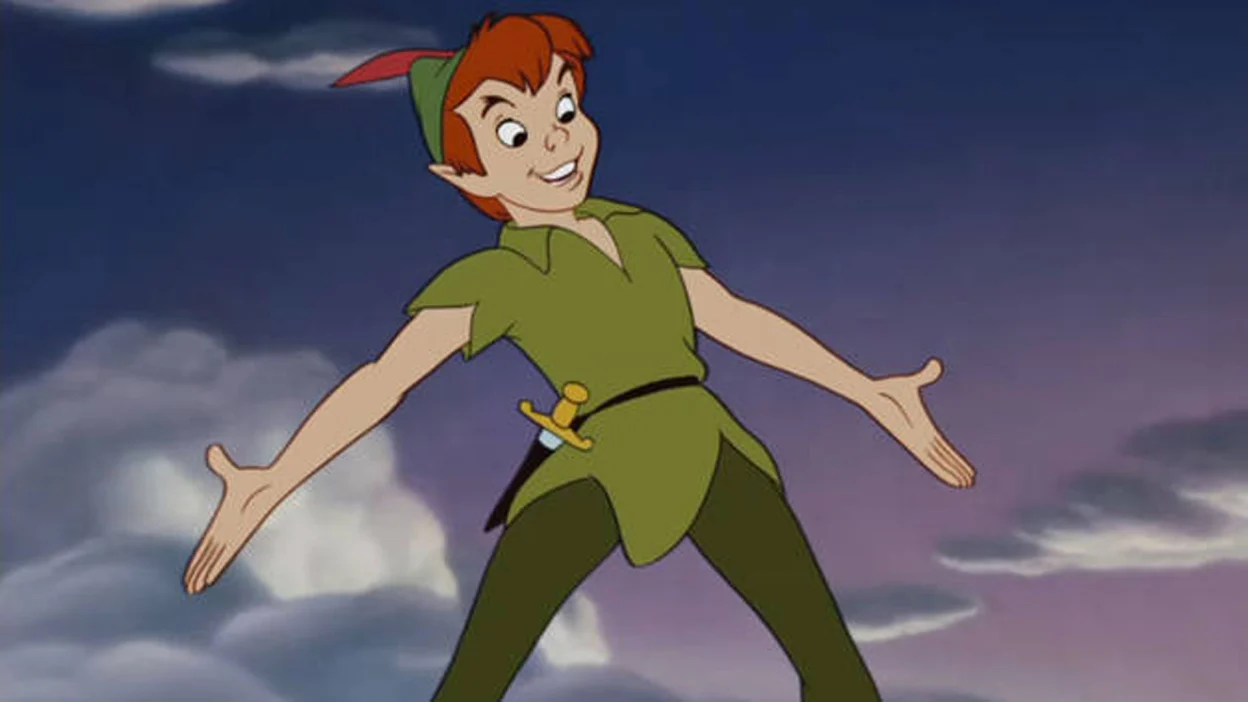
The complexity of Peter Pan’s feelings towards Wendy lies at the heart of their relationship. Peter’s affection for Wendy is undoubtedly deep, but it takes on a unique and nuanced form. He loves her, but not in the romantic sense that one might expect. Instead, Peter sees Wendy as a mother figure, someone who cares for and nurtures the Lost Boys in Neverland.
The journey begins with Peter inviting Wendy to Neverland, not as a romantic companion, but as the mother to his band of Lost Boys. The dynamic between them is one of maternal love and care, with Peter assuming the role of the eternal child who seeks the guidance and comfort only a mother can provide.
Advertisement
The pivotal moment occurs when Wendy, harboring romantic feelings for Peter, confesses her love to him. In response, Peter gently rebuffs her advances, emphasizing that his love for her is akin to a son’s love for his mother. This revelation adds a layer of complexity to their relationship, one that transcends conventional romantic notions.
As Peter and Wendy share a poignant conversation on the roof, Peter unveils a surprising revelation—they used to live in the same house. Wendy, touched by the connection, invites Peter to stay. However, Peter’s refusal to grow up becomes a barrier to a conventional life, and he departs with Tinker Bell, leaving behind the prospect of a domestic existence with Wendy.
The choice not to stay with Wendy stems from Peter’s unwavering commitment to the world of perpetual youth and adventure. For Peter, growing up represents a departure from the carefree existence of Neverland, and the responsibilities that come with it are too heavy a burden for his spirited nature.
In essence, while Peter Pan may not have reciprocated Wendy’s romantic feelings, the depth of their connection is undeniable. It is a bond that transcends the conventional boundaries of love, one that exists on a plane where maternal care and eternal youth converge. Peter’s decision to leave Wendy behind is a poignant reminder that, for him, the magic of Neverland is inseparable from the freedom of perpetual childhood.
In the end, Peter Pan’s choice to soar through the skies with Tinker Bell instead of settling down with Wendy adds a bittersweet note to their tale—a testament to the complexities of love, youth, and the eternal allure of Neverland.
Leave a Reply