
Unveiling the Enigma of Peter Pan: A Tragic Tale of Never-Ending Youth
Advertisement
In the enchanting tapestry of literature, few characters hold as much allure and complexity as Peter Pan, the timeless creation of Scottish novelist and playwright J. M. Barrie. As readers and audiences venture into the whimsical realm of “Peter and Wendy,” “Peter Pan,” “Peter and the Starcatcher,” and “Peter and Alice,” they find themselves entangled in a narrative that blurs the lines between happiness and tragedy.
At first glance, Peter Pan’s story might seem like an endless adventure filled with games, fun, and the eternal spirit of youth. Yet, beneath the surface, a layer of tragedy unfolds, revealing the poignant truth that lies at the heart of Peter’s existence. Despite the laughter, games, and daring escapades, Peter Pan is burdened by a unique affliction—he cannot remember the moments that have defined his never-ending life.
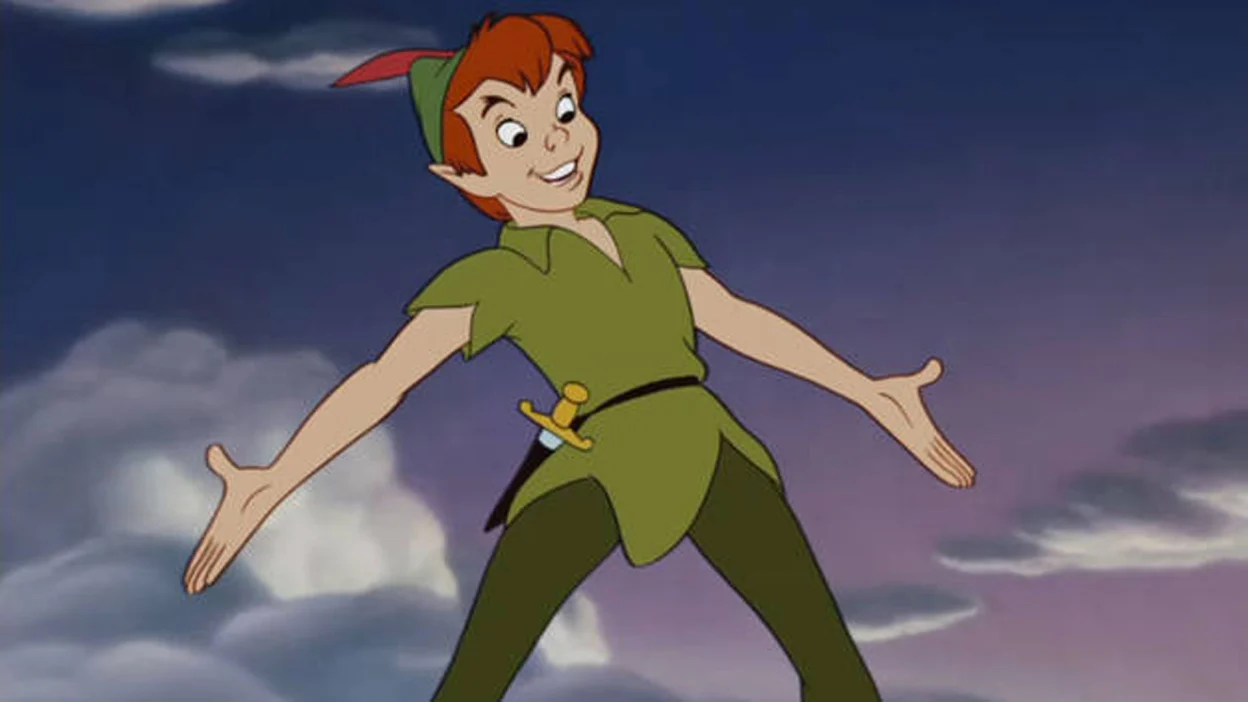
The constant search for new experiences to keep him occupied is both the essence of Peter’s existence and the source of his tragic predicament. In his pursuit of unbridled fun, Peter forfeits the ability to retain the memories that color a life well-lived. The narrative, thus, takes on a bittersweet hue, as the very essence of what makes Peter Pan the eternal boy becomes the crux of his existential challenge.
Advertisement
The tragedy of Peter Pan’s story lies not in the adventures themselves but in the fleeting nature of the joy he experiences. As he fills his life with mirth and mischief, the moments slip away into the abyss of forgotten memories, leaving Peter in a perpetual cycle of seeking new thrills to replace the ones lost to the sands of time.
One may wonder about the origin of Peter Pan, questioning whether he is a fairy or a human. Barrie’s rendition of Peter Pan as human-born, not a fairy, adds another layer of complexity to the character. Despite his human origins, Peter has spent so much time in Never Land that he has become as much a fairy as a boy. The magic, capriciousness, and amorality inherent in fairies of old Scots tradition permeate Peter’s being, blurring the boundaries between the mortal and magical realms.
The dichotomy of Peter Pan’s existence, straddling the realms of humanity and fairydom, adds an intriguing facet to his character. He embodies the magical and unpredictable qualities of fairies while carrying the weight of human emotions and aspirations. This duality makes Peter Pan a captivating enigma, transcending the confines of a traditional protagonist.
In essence, Peter Pan’s story is a paradoxical tapestry woven with threads of joy and sorrow, adventure and forgetfulness. It challenges the conventional notions of a happy ending, inviting readers and audiences to ponder the true cost of never-ending youth and the pursuit of eternal bliss.
As we journey through the pages of Barrie’s creation, we are confronted with the realization that, for Peter Pan, happiness is elusive, and the pursuit of fun is both his greatest joy and deepest sorrow. In the end, the tragedy of Peter Pan lies not in the absence of happiness but in the ephemeral nature of the happiness he seeks—an eternal quest that paints his narrative with shades of both light and shadow.
Leave a Reply