
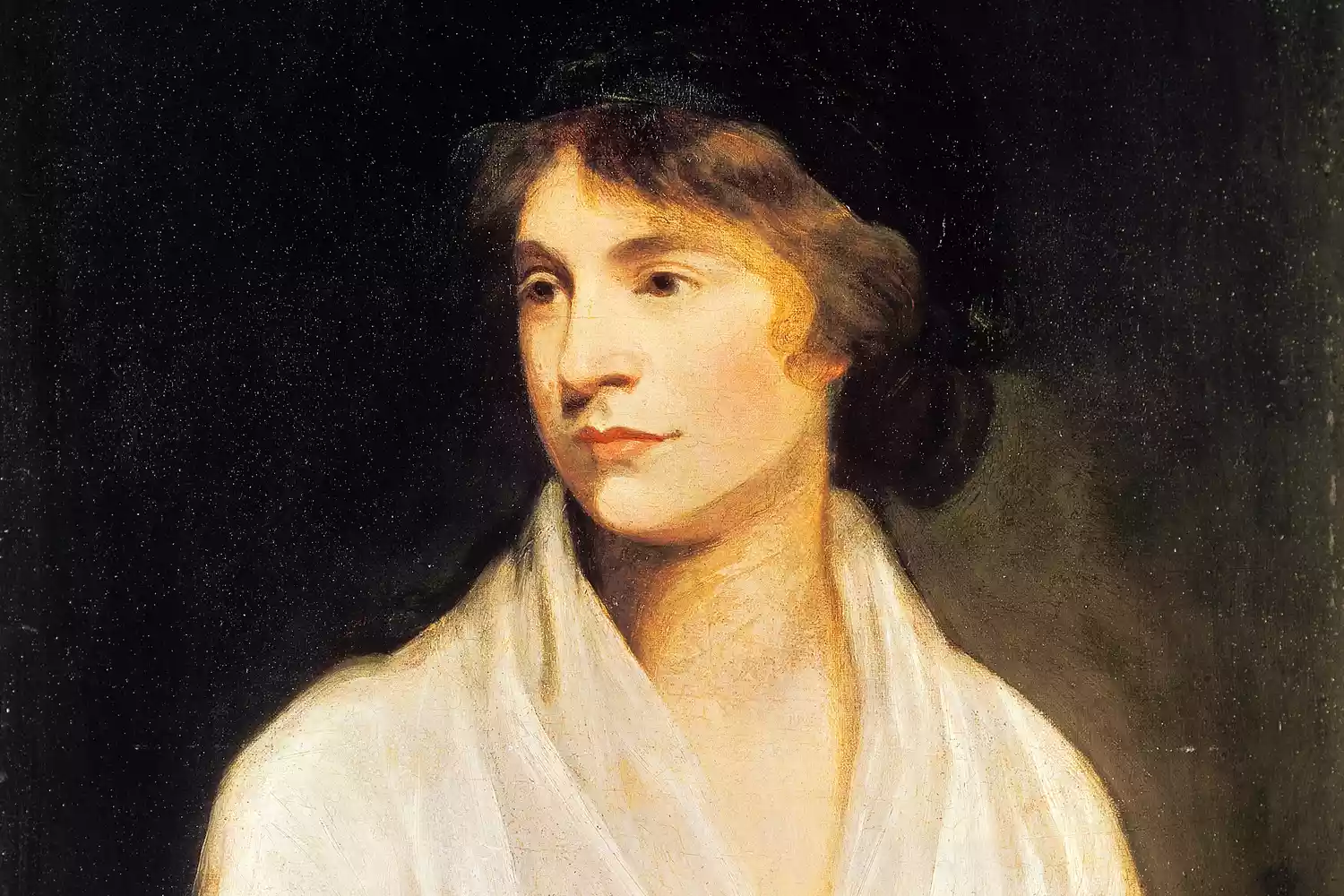
Mary Wollstonecraft, the founder of feminism, was an English woman who was known to be an intellectual luminary of the 18th century. Mary Wollstonecraft’s life and ideas solidify her legacy as the founder of feminism.
Advertisement
Mary Wollstonecraft’s groundbreaking work, “A Vindication of the Rights of Woman,” published in 1792, laid the philosophical groundwork for feminist thought and activism.
Mary Wollstonecraft was born on April 27, 1759, in Spitalfields, London, and her childhood life was marked with abuse and financial hardship.
Despite limited formal education, Mary Wollstonecraft was an avid reader, immersing herself in the Enlightenment ideas that permeated 18th-century Europe. Mary Wollstonecraft’s intellectual curiosity and passion for justice fueled her journey toward becoming a pioneering feminist thinker.
Advertisement

Image Source: Thought Co
Wollstonecraft’s seminal work, “A Vindication of the Rights of Woman,” challenged prevailing notions of women as intellectually inferior and argued for their equal rights to education and societal participation.
At a time when women’s roles were confined to the domestic sphere, Mary Wollstonecraft boldly proclaimed that denying women access to education perpetuated their subjugation.
Central to Mary Wollstonecraft ‘s philosophy was the conviction that women, like men, possessed rational minds and deserved equal opportunities to develop their intellect.
Mary Wollstonecraft asserted that education should be a tool for fostering reason and virtue in both genders, advocating for a more enlightened and just society.
While Wollstonecraft faced criticism and ridicule during her lifetime, her ideas gained traction in the 19th century and beyond. Feminist leaders such as Susan B. Anthony, Elizabeth Cady Stanton, and Virginia Woolf acknowledged Wollstonecraft’s enduring influence.
Leave a Reply