
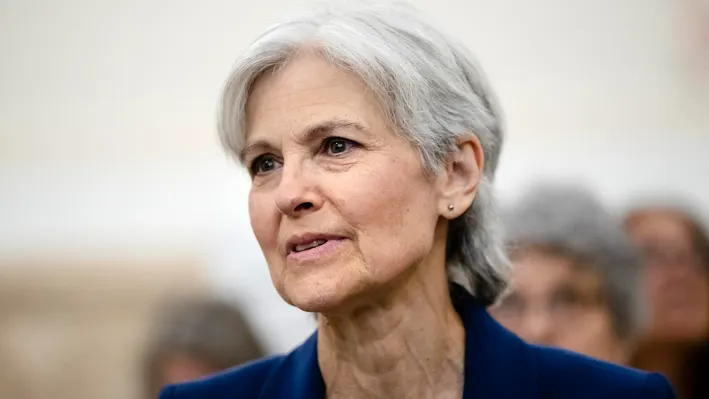
Jill Ellen Stein, a prominent American physician, activist, and former Green Party presidential nominee has played a significant role in shaping the political discourse in the United States. As a two-time contender for the presidency, Stein’s electoral impact can be measured in the percentage of votes she garnered during the 2012 and 2016 elections.
Advertisement
2012 Presidential Election:
In the 2012 United States presidential election, Jill Stein secured the Green Party’s nomination, positioning herself as a vocal advocate for environmental sustainability, social justice, and progressive policies. Stein’s campaign resonated with a sizable portion of the electorate, earning her 469,627 votes nationwide. This translated to approximately 0.36% of the popular vote, reflecting a notable level of support for the Green Party’s platform.

AP
2016 Presidential Election:
Undeterred by the challenges of the political landscape, Jill Stein once again entered the presidential race in 2016 as the Green Party’s nominee. Her campaign, focused on issues such as climate change, healthcare reform, and anti-interventionist foreign policy, garnered increased attention. In the general election, Stein secured 1.07% of the popular vote, totaling 1,457,216 votes.
Advertisement
While Stein’s percentage of the popular vote more than doubled compared to her 2012 performance, the Green Party’s candidate faced formidable competition in a highly polarized electoral environment. Despite her impassioned advocacy and strong third-party showing, Jill Stein did not secure any electoral college delegates.
The Significance of Third-Party Candidacies:
Jill Stein’s presidential campaigns underscore the role of third-party candidates in American politics. Although facing challenges within a predominantly two-party system, Stein’s campaigns allowed voters to voice support for alternative platforms and perspectives. The percentage of votes she received reflects a segment of the electorate seeking alternatives beyond the traditional Democratic and Republican choices.
Jill Stein’s electoral endeavors in 2012 and 2016 left an imprint on the American political landscape. Her campaigns, driven by a commitment to progressive ideals and environmental causes, resonated with voters seeking alternatives. As discussions about the role of third parties in national elections continue, Jill Stein’s electoral impact serves as a testament to the diverse voices within the American electorate.
Leave a Reply