
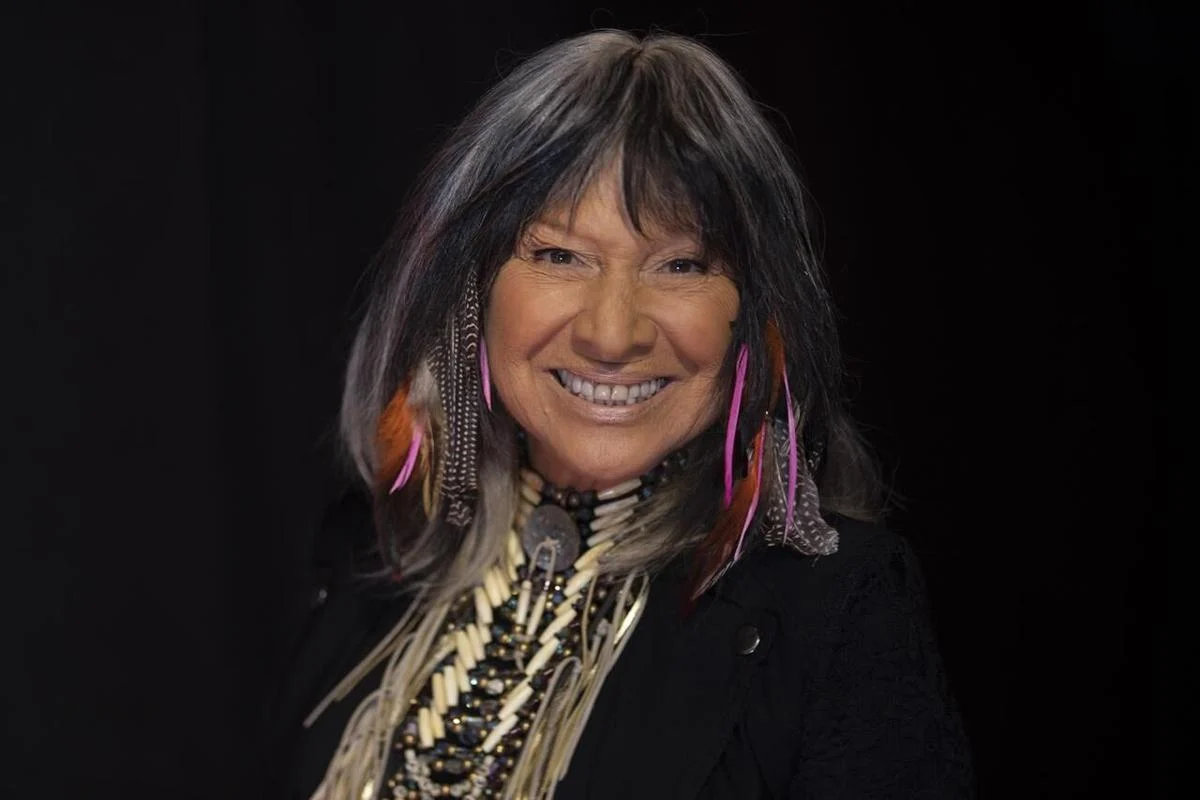
Buffy Sainte-Marie is a name synonymous with resilience, activism, and groundbreaking contributions to the world of music.
Advertisement
The answer to what made her famous is a combination of her exceptional talent, unwavering commitment to social justice, and a career filled with groundbreaking achievements.
Born on the Piapot 75 reserve in the Qu’Appelle Valley, Saskatchewan, in 1941, Buffy Sainte-Marie’s early life was marked by both adversity and opportunity.
However, her path to fame was solidified by her unparalleled musical talent. Buffy Sainte-Marie’s unique voice, heartfelt lyrics, and musical innovation set her apart in the 1960s folk music scene.
Her breakthrough came with her debut album “It’s My Way!” in 1964, featuring songs that would become classics, like “Universal Soldier.” The album showcased her folk and protest music, resonating with a generation that was passionate about social justice issues and civil rights.
One of the defining moments of her career was her participation in the Greenwich Village folk music scene, where she rubbed shoulders with legendary artists like Bob Dylan and Leonard Cohen.
Advertisement

Her fame soared even higher when she became an integral part of the Native American civil rights movement. She brought indigenous issues to the forefront and fought for recognition and justice for indigenous people. Her 1969 album, “Little Wheel Spin and Spin,” included songs that addressed the plight of Native Americans and their struggles.
Throughout her career, Buffy Sainte-Marie continued to break boundaries. In 1982, she became the first indigenous woman to win an Academy Award for her song “Up Where We Belong” from the film “An Officer and a Gentleman.”
Buffy Sainte-Marie’s fame is not solely attributed to her music, but rather the harmonious blend of her extraordinary talent and her unyielding dedication to the causes she holds dear.
Leave a Reply